


AI camera glasses: building a wearable product line
Views: 0 Author: Site Editor Publish Time: 2026-07-10 Origin: Site


Building a wearable product line introduces a harsh engineering reality. Bridging the gap between a bulky lab prototype and daily-wearable eyewear requires aggressive compromises. You must balance strict form factor constraints against intense thermal management limits. Early hardware iterations often suffer from rapid battery drain. As you plan your product lineup, you face a critical B2B sourcing decision. You must define whether to pursue a highly customized ground-up build. Alternatively, you might adapt a proven reference design or partner closely with a white-label manufacturer. Your chosen path dictates your initial capital requirements and your ultimate time-to-market.
Industry leaders have navigated this exact fork—Meta scaled consumer adoption through strategic OEM partnerships, while specialized brands like Inmo leveraged ODM turnkey solutions to accelerate their GO series to market. Their pathways offer practical reference points for your own sourcing roadmap
Establishing baseline success for any OEM AI smart glasses or custom-built wearable depends on seamlessly marrying edge AI processing into discreet hardware.Consumers and enterprise users expect comfortable frames. You must achieve this ergonomic balance while strictly managing global privacy compliance. We will explore how to prioritize your hardware components below. You will learn how to navigate complex sourcing strategies and mitigate critical user adoption risks.
Key Takeaways
Defining the core use case (consumer lifestyle vs. enterprise utility) dictates the entire hardware Bill of Materials (BOM).
Selecting between an in-house build, an OEM partnership, or an ODM smart glasses manufacturing collaboration directly impacts time-to-market, upfront capital, and IP ownership..
Thermal limits and battery drain remain the top failure points in first-generation smart wearables.
Privacy compliance (hardware indicators, data encryption) is a non-negotiable launch requirement, not a post-launch patch.
Defining the Use Case and Baseline Success Criteria
Hardware engineering follows user intent. You cannot build a universal wearable device. Attempting to satisfy all users results in a heavy, underperforming product. You must clearly define your target market before finalizing any component selections.
B2C vs. B2B Deployment
Consumer and enterprise markets demand entirely different hardware architectures. Consumer devices prioritize aesthetics, lightweight frames, and social features. smart ai camera glasses designed for everyday wear focus heavily on real-time language translation and discreet media capture. They require stylish designs mimicking traditional eyewear.
Current market benchmarks illustrate this priority: Rokid Glasses achieve a 49-gram form factor with a 120Hz refresh rate display, while Inmo Air 3 packs a 16MP camera into a spatial computing frame—both demonstrating that consumer-grade white-label AI camera glasses and customized ODM solutions now rival traditional eyewear in weight and aesthetics.
Conversely, enterprise deployments operate under harsh conditions. Industrial environments demand rugged reliability over sleek aesthetics. Factory workers and field technicians rely on professional ai camera glasses for complex tasks. These devices optimize for remote expert assistance, barcode scanning, and safety compliance. Their frames often incorporate protective lenses and reinforced hinges to survive factory floors.
Defining the MVP (Minimum Viable Product)
Founders often fall into the feature creep trap. They attempt to pack spatial computing, LiDAR, and heavy vision models into one frame. This approach destroys battery life and increases heat generation. You must prioritize one core AI function to manage computational load effectively.
Identify the primary workflow: Focus strictly on visual recognition, voice translation, or remote video streaming.
Strip away secondary features: Remove spatial mapping sensors if the primary goal is simple object detection.
Select appropriate compute: Match your processor tier to your single prioritized function to save power.
Focusing on a narrow MVP allows you to release a stable, functional product quickly. You can gather real user feedback before investing in complex spatial video integrations.
Success Metrics
Initial unit sales provide a misleading success metric. High return rates plague the wearable technology industry. You must look beyond simple purchase volume. We recommend tracking Daily Active Wear Time (DAWT) as your primary metric.
DAWT reveals the true utility of your device. A user wearing the frames for four hours daily indicates strong product-market fit. You must establish whether the device genuinely replaces an existing workflow. It should reduce the need to check a smartphone. If your hardware creates unnecessary friction, users will relegate it to a desk drawer within two weeks.
Core Hardware and Compute Evaluation Dimensions
Hardware selection dictates your ultimate product capabilities. Small frames severely limit your component choices. You must balance processing power against physical space and battery capacity.
Compute Architecture: Edge vs. Cloud
AI processing location defines your latency and battery drain. Cloud processing relies on stable cellular or Wi-Fi connections. It pushes heavy LLM requests to remote servers. This approach saves battery life but introduces noticeable response latency. It also breaks down in low-connectivity zones.
Running on-device computer vision models offers immediate responsiveness. Edge AI ensures privacy by processing images locally. However, continuous on-device inference generates significant heat. It aggressively drains small lithium-polymer batteries. You must evaluate this trade-off carefully.
Architecture Type | Primary Advantage | Primary Disadvantage | Best Use Case |
|---|---|---|---|
Cloud Compute | Allows massive LLM integration and saves local battery life. | High latency and total reliance on continuous network connection. | Voice-based AI translation and conversational agents. |
Edge Compute | Zero latency, highly secure, works entirely offline. | Generates substantial frame heat and drains batteries rapidly. | Real-time inventory scanning and local facial recognition. |
Hybrid Model | Balances speed and battery life dynamically. | Requires complex software development and SDK management. | Premium enterprise remote assistance workflows. |
Optical & Sensor Requirements
Camera integration forces a difficult aesthetic choice. You must balance sensor resolution against physical module size. Larger sensors capture more light. They improve computer vision accuracy in dim warehouse environments. However, large sensors require prominent center-bridge enclosures.
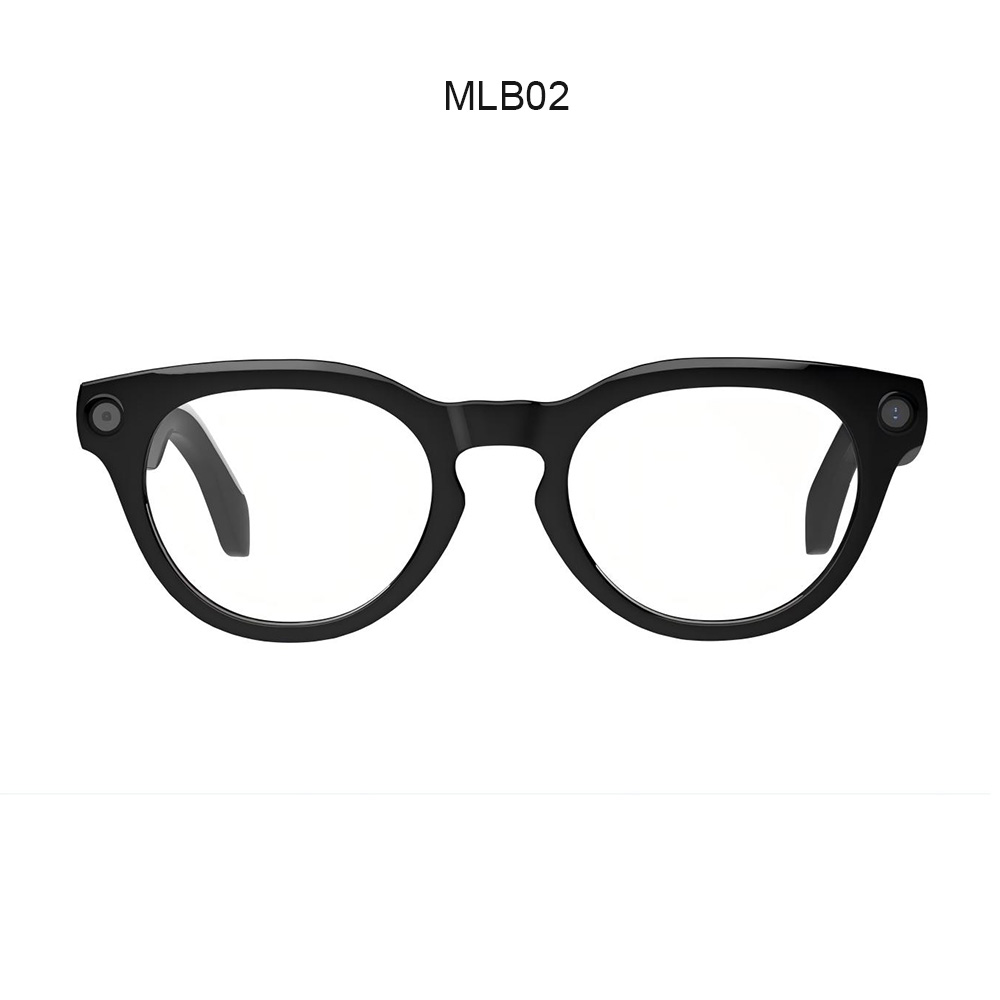
Discrete frame-integrated cameras look much better. They blend into the hinge area. Unfortunately, these tiny lenses struggle with low-light performance. Their small apertures restrict incoming photons. You must decide if aesthetic camouflage matters more than high-fidelity computer vision accuracy.
Thermal Budgets and Power Consumption
Thermal management dictates user comfort. Skin burns or discomfort will immediately ruin product adoption. Heavy visual processing heats up the logic board quickly. You must dissipate this heat safely across the frame temples using graphite sheets or tiny vapor chambers.
Always-on voice commands require ultra-low-power microcontrollers. These specialized chips listen for wake words. They consume fractions of a milliwatt. They wake the main application processor only when necessary. Implementing this tiered power architecture is mandatory for all-day wearability.
Acoustic Engineering
Audio feedback forms the backbone of wearable AI interactions. Open-ear audio using directional micro-speakers provides excellent spatial awareness. Users can hear their surroundings while receiving AI translations. However, micro-speakers struggle in noisy industrial environments.
Bone conduction offers a robust alternative. Transducers vibrate against the user's skull to transmit sound. This method works flawlessly on loud factory floors. It also prevents audio leakage, ensuring confidential AI responses remain private. You must evaluate your acoustic hardware based on ambient noise levels in your target market.
Sourcing Strategies: Custom Design vs. OEM AI Smart Glasses
Hardware development requires immense capital. Choosing how to manufacture your frames is your most consequential business decision. You can build from scratch or leverage existing supply chains.
White-Label / OEM Route
Partnering for OEM ai smart glasses offers the path of least resistance. You purchase pre-engineered hardware and apply your branding.
Pros: This route provides rapid time-to-market. Factories offer proven manufacturing yields and stable quality control. You avoid massive upfront Non-Recurring Engineering (NRE) costs. Your software team can immediately begin developing AI features on stable hardware.
Cons: You sacrifice physical differentiation. Competitors might purchase the exact same chassis. You hold minimal IP over the hardware design itself.
ODM (Original Design Manufacturer) Route
The ODM path balances speed and customization. You utilize existing reference architectures. Many companies build upon platforms like Qualcomm's Snapdragon AR series, retaining the proven logic board layout while customizing the exterior chassis—plastics, hinges, and optical layouts—along with the proprietary software layer. This route reduces electronic engineering risk while allowing strong brand identity.
Real-world ODM smart glasses manufacturing partnerships illustrate the model's versatility. Meta sources its Ray-Ban smart glasses through EssilorLuxottica, the world's largest eyewear manufacturer, with Goertek recently joining as a new supplier—a classic OEM arrangement that scaled to 1.8 million shipments in 2024 alone. For deeper customization, Rokid partnered with Lens Technology as its exclusive full-chain assembly partner, covering everything from frames and optical modules to automated production, yielding the 49-gram Rokid Glasses that secured over 250,000 pre-orders. Meanwhile, Inmo relies on Jiahe Intelligence for exclusive ODM production of its GO series, leveraging specialized assembly lines for optical alignment and binocular calibration. These cases demonstrate that whether you pursue a private label smart glasses strategy or a highly customized custom AI eyewear manufacturing project, the ODM ecosystem offers proven supply chain partners ready to scale.
Custom / Ground-Up Build
Building from scratch suits unique luxury form factors. It also fits highly specialized enterprise use cases requiring proprietary sensors. However, ground-up development requires extensive capital and patience.
You must fund three distinct validation phases. Engineering Verification Test (EVT) proves the core technology works. Design Verification Test (DVT) ensures the product can be manufactured reliably. Production Verification Test (PVT) scales the assembly line processes. Each phase takes months. Delays drain capital rapidly.
Mitigating Adoption Risks and Privacy Compliance
Great hardware means nothing if users reject it. Wearable cameras evoke strong societal reactions. You must proactively engineer trust into your device.
The "Creep Factor" and Hardware Indicators
Public pushback destroyed early wearable camera products. People hate feeling unknowingly recorded. You must respect global privacy standards. Implement highly visible recording indicators.
Do not rely on software-based indicator lights. Hackers or malicious users can disable software lights. You must design hardwired LED indicators. When power flows to the camera sensor, it must physically flow through the LED first. This physical circuit ensures the recording light cannot be bypassed. This transparency builds vital public trust.
Data Security
Enterprise clients demand rigorous data security. They worry about proprietary data captured by wearable ai glasses inside secure facilities. Visual data streams contain trade secrets and employee information.
You must evaluate local data encryption protocols. Encrypt all images before they enter local storage. Maintain secure TLS tunnels for all cloud transmissions. Provide enterprise IT administrators with robust mobile device management (MDM) tools. They need the ability to remotely wipe hardware instantly.
Ergonomics and Weight Distribution
Poor ergonomics cause immediate wearable abandonment. Heavy frames dig into the wearer's nose. Nose-bridge fatigue is the primary reason users stop wearing smart frames.
You must balance the components perfectly. Place the camera and main logic board in the front chassis. Route flexible printed circuit boards through the hinges. Store the heavy battery modules in the rear temple tips behind the ears. A 50/50 weight distribution across the arms eliminates frontal pressure. It makes a 40-gram frame feel significantly lighter.
Shortlisting Manufacturing Partners and Next Steps
Your factory partner dictates your ultimate success. Assembling micro-electronics into thin plastic frames requires specialized expertise. You cannot use a standard consumer electronics factory.
Evaluating Supply Chain Partners
Vet your potential factories rigorously. Evaluate their specific experience with micro-optics alignment. Ask about their yields on flexible PCBs. Top-tier AI glasses OEM/ODM suppliers—such as Goertek with its micro-optics integration, Lens Technology with full-chain automated assembly, and Jiahe Intelligence with specialized AR production lines—differentiate themselves precisely through these metrics. Demand evidence of their clean-room sensor calibration capabilities and flexible PCB yield rates before committing to any partnership.Flexible boards break easily during hinge assembly. A competent partner will demonstrate advanced consumer electronics miniaturization skills. They should show you clean-room facilities dedicated to sensor calibration.
Software Ecosystem Readiness
Hardware requires a robust software foundation. Ensure your manufacturing partner provides comprehensive SDKs and APIs. Your developers need low-level access to the camera feed. They need clean audio streams to build out custom voice translation models. Building competitive ai camera glasses requires seamless harmony between the physical sensors and your AI inference engine.
Actionable Next Steps
Once you select a partner, move decisively. Request a 'looks-like, works-like' prototype. This prototype proves the internal components fit the aesthetic design. Next, finalize your BOM cost based on target manufacturing volumes. Finally, initiate the regulatory certification process immediately. Securing FCC, CE, and UL certifications takes months. Do not let compliance delays derail your launch timeline.And as Meta targets 10 million annual units by late 2026, the capacity of your chosen wearable device OEM manufacturing partner will become as critical as the product itself
Conclusion
Bringing intelligent eyewear to market—whether through a turnkey smart glasses solution or a ground-up custom AI eyewear manufacturing project—requires navigating strict physical limitations. You must balance ambitious AI software features against battery constraints and thermal boundaries. Hardware engineering demands constant compromise.
A successful launch hinges on your manufacturing strategy. You must choose a sourcing model matching your capital runway. Focus relentlessly on daily wearability and ergonomic balance. Protect user privacy through hardwired transparency. By controlling your core use case and selecting the right OEM/ODM partner for your specific scale and differentiation goals, you can successfully deploy a compelling wearable product line.
FAQ
Q: How much does it cost to tool a new line of AI camera glasses?
A: White-label rebranding requires minimal upfront capital, often under $50,000 for custom plastics and packaging. A complete ground-up custom build demands rigorous NRE phases. Custom tooling, PCB layout, and extensive EVT/DVT testing typically push NRE costs between $500,000 and $2 million before mass production begins.
Q: Can current OEM models support real-time edge AI processing?
A: Yes, but capabilities vary. Basic models act as simple Bluetooth peripherals, forwarding camera feeds to a paired smartphone for processing. Advanced OEM frames utilize dedicated low-power neural processing units (NPUs). These handle lightweight local tasks like wake-word detection and basic object recognition directly on the device.
Q: What are the primary regulatory certifications required for smart glasses?
A: You must secure FCC (USA) or CE (Europe) certifications for electronic emissions and Bluetooth/Wi-Fi radios. Battery safety requires UL 1642 or IEC 62133 certifications. Devices utilizing lasers or specific optical sensors may also need FDA clearance or specific eye-safety certifications depending on local laws.
Q: How do we handle prescription (Rx) lens integration?
A: Most manufacturers ship frames with standard plano (non-prescription) lenses. Integrating Rx lenses requires partnering with specialized optical labs. Users typically take the frames to an optometrist, or you can establish a mail-order fulfillment partnership where the lab custom-cuts and installs Rx lenses prior to final shipping.


