


Consumer AR glasses with weekly charging: who they suit
Views: 0 Author: Site Editor Publish Time: 2026-07-13 Origin: Site


For years, early adopters of wearable displays faced a highly frustrating bottleneck. Heavy headsets required frequent charging, creating severe daily battery anxiety. Users routinely abandoned devices requiring constant tethering or inconvenient mid-day top-ups. Today, a major paradigm shift is transforming the wearable industry completely. Engineers optimized power efficiency using incredibly small monochrome micro-LEDs and specialized ultra-low-power processors. This crucial breakthrough finally enables true multi-day use. Weekly charging shifts these devices from experimental novelties into highly practical daily tools. This guide provides an objective evaluation framework for potential buyers. We will help you determine if consumer ar glasses fit your specific daily workflow seamlessly. You will learn about the necessary trade-offs required to achieve extended battery life. By the end, you can confidently decide if this emerging technology aligns directly with your personal habits.
Key Takeaways
Utility over Immersion: Weekly-charging AR glasses prioritize heads-up notifications, AI assistance, and lightweight form factors over heavy spatial computing or full-color 3D graphics.
Target Demographics: Best suited for professionals needing hands-free data, digital minimalists, and heavy travelers.
Cost Realities: Buyers must evaluate both upfront hardware costs and emerging subscription models for on-device AI features.
The Ultimate Trade-off: Extended battery life requires sacrificing Field of View (FOV) and complex visual rendering.
Why the Market is Pivoting to Long-Battery AR Glasses
We see a massive shift happening across the wearable technology landscape. Early augmented reality headsets demanded constant, daily charging. This intense power friction caused terrible user retention rates globally. People simply stopped wearing devices needing emergency mid-day top-ups. Daily tethering to a wall charger ruins the ultimate mobile experience. Enter modern long-battery ar glasses. They solve this exact hardware problem efficiently. By stretching battery life to a full week, the technology finally becomes invisible and truly useful.
Specific technical enablers made this industry pivot completely viable. Manufacturers aggressively moved away from power-hungry components. They widely adopted low-draw display technologies instead. MicroLED and MicroOLED panels represent a massive leap forward. These tiny panels consume very little power while remaining incredibly bright outdoors. Furthermore, engineers standardized Bluetooth Low Energy (BLE) connections. BLE ensures your glasses stay connected to your phone without draining either battery rapidly. Specialized co-processors handle basic sensor data locally. They never wake the main processor unnecessarily.
Form factor alignment matters just as much as internal technology. Smaller batteries allow engineers to design frames mimicking traditional eyewear. They finally overcame the severe bulkiness plaguing legacy spatial computing headsets. Engineers cleverly hide these tiny batteries inside the temple arms. This smart placement balances the overall frame weight perfectly. You no longer look like a science fiction cyborg in public. You look like someone wearing standard, stylish eyeglasses. This social acceptance drives the market pivot heavily.
Ideal User Profiles for Everyday Smart Glasses
Who actually benefits most from these specialized devices? We know everyday smart glasses serve specific niches incredibly well. They are absolutely not for hardcore gamers. They serve pragmatic people needing seamless, instant data access. Let us explore the ideal user profiles in detail.
The "Always-On" Professional
Corporate leaders face constant, overwhelming communication demands. You can use these wearables as a discreet teleprompter during major presentations. The text scrolls silently in your peripheral vision. They also provide real-time language translation during global executive meetings. You can quickly filter urgent notifications directly in your line of sight. You accomplish all this without ever breaking crucial eye contact. Best practice suggests customizing notification filters aggressively. Only allow VIP contacts to interrupt your vision during working hours.
The Digital Minimalist
Many modern users desperately want to reduce smartphone screen time. Weekly-charging wearables help you detach from endless doom-scrolling effectively. They route only highly critical updates straight to your eyes. You see turn-by-turn walking navigation or urgent family messages instantly. The phone stays safely hidden inside your pocket. A common mistake is leaving all app notifications turned on. This floods your vision and ruins the minimalist experience completely.
The Deskless and Field Worker
Prosumers and light enterprise workers benefit heavily from this form factor. Field workers require highly reliable hardware above all else. They access warehouse picking lists hands-free. They check complex shift schedules without dropping their specialized tools. They follow step-by-step equipment repair guides safely. Crucially, the hardware survives a full forty-hour workweek easily. You do not need a delicate charging dock on the dirty factory floor. The weekly charging cycle matches weekly shift rotations perfectly.
The Trade-Offs: What You Give Up for a Weekly Charge
You cannot have multi-day battery life without making hardware sacrifices. Physics strictly demands specific engineering compromises. We must frame these trade-offs honestly for potential buyers.
First, consider the strict visual fidelity limitations. Daily-charge competitor devices often offer full RGB video rendering. Weekly-charging models rely heavily on single-color text. You mostly see simplified iconography and basic vector graphics. They project crisp green or white text against the real world. They do not project high-definition movies or complex 3D models. You sacrifice rich colors to gain a week of freedom.
Second, you face strict Field of View (FOV) constraints. Power-efficient optics typically feature a noticeably narrow FOV. Expect a tight viewing angle ranging between 15° and 30°. This narrow window works perfectly for reading short text prompts. It fails completely for immersive video consumption or gaming. A common mistake is buying these frames expecting a portable cinema experience. You will be deeply disappointed if you expect wide-angle entertainment.
Finally, heavy processing power dependencies exist by design. These smart wearables act primarily as dumb companion screens. They cannot compute heavy mathematical tasks alone. They intentionally offload complex processing directly to a connected smartphone. When you trigger AI voice queries, your phone does the heavy lifting. This smart delegation preserves the glasses' tiny internal battery. You must keep your smartphone nearby to unlock their full potential.
Evaluating Total Cost: Hardware, AI, and Subscriptions
Buyers must look closely beyond the initial hardware price tag. Let us evaluate the overall financial commitment required. First, we must establish baseline price expectations clearly. Premium models typically fall into the $300 to $800 range today. Upfront cost represents only a portion of the long-term value. You pay primarily for the convenience of leaving the charger at home.
Next, you must acknowledge the rapid rise of SaaS in wearables. The tech industry shows a strong trend toward software subscription models. Companies often gate advanced on-device AI features behind monthly paywalls. You might pay an extra monthly fee for live foreign language translation. Advanced contextual visual search may also require a premium tier. Evaluate these recurring software costs carefully before purchasing the hardware.
Finally, understand the growing OEM consumer ar wearable market. You can choose white-label or OEM-backed devices freely. Alternatively, you can choose hardware built by closed-ecosystem tech giants. Evaluate OEM models carefully based on strict data privacy policies. Check their companion app ecosystem longevity before buying. Open-source or OEM-backed devices sometimes offer far better privacy controls. Tech giants might monetize your daily viewing habits heavily.
Shortlisting Framework for Consumer AR Glasses
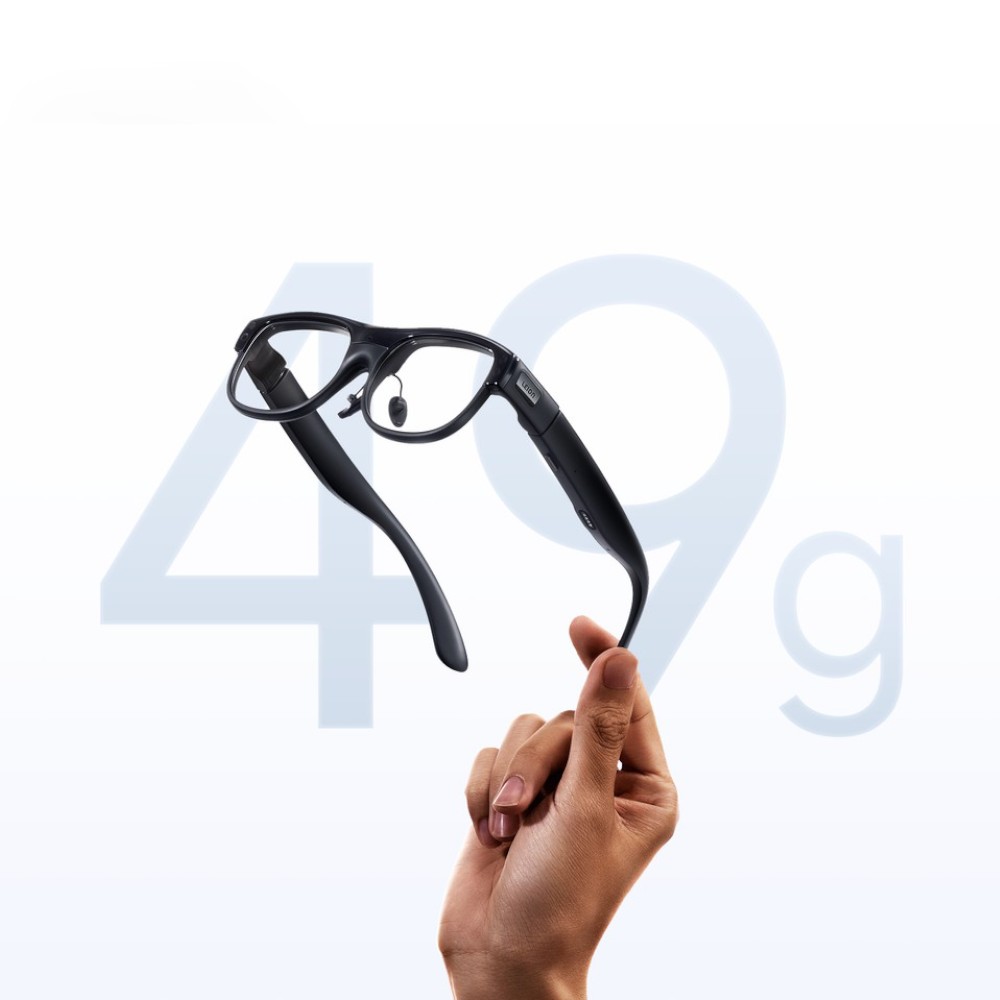
How do you pick the right model for your face? We created a strict shortlisting framework to guide your purchase. You must validate frame weight versus daily comfort immediately. True lightweight consumer ar glasses should absolutely weigh under 50 grams. Anything heavier causes severe nose bridge fatigue over a long workday. If the frame weighs 70 grams, you will instinctively take it off by noon.
Next, verify Prescription (Rx) compatibility thoroughly. You need perfectly clear vision above all else. Check if the manufacturer supports integrated prescription lenses natively. Some companies offer convenient magnetic snap-in optical inserts. Others partner with third-party opticians for custom glass integration. Best practice suggests confirming your specific astigmatism requirements before ordering.
Finally, evaluate OS compatibility and potential ecosystem lock-in. Ensure the companion app has complete feature parity across iOS and Android. Test the underlying stability of background Bluetooth connections. A frequently dropped connection renders the wearable device temporarily useless.
Evaluation Metric | Ideal Baseline Requirement | Practical Daily Implication |
|---|---|---|
Ergonomic Weight | Under 40–50 grams total | Prevents severe nose bridge pain during extended daily wear. |
Rx Compatibility | Magnetic inserts or direct optical support | Absolutely essential for users requiring daily vision correction. |
OS Support Parity | Full iOS and Android feature equality | Prevents forced smartphone brand switching in the future. |
Battery Standby | 5+ days of standby time | Eliminates daily charging friction and severe battery anxiety. |
Conclusion
We must reiterate one vital truth about this market segment. Multi-day wearable displays remain strict tools for daily efficiency. They are absolutely not portable entertainment consoles. They streamline your focus and keep you present in reality. They deliver critical data precisely when you need it most.
Before purchasing, carefully audit your specific daily screen-time habits. Do you mostly check brief text notifications throughout the day? Or do you consume hours of rich media? If you crave deep media consumption, look elsewhere immediately. If you value staying connected without constantly staring at a phone, proceed confidently.
Your next steps involve validating your purchase readiness properly. We strongly recommend booking a physical hardware demo first. Utilize extended trial periods whenever hardware companies offer them. Real-world ergonomic testing remains the ultimate deciding factor for wearable tech.
FAQ
Q: Can I watch videos on AR glasses that only need charging weekly?
A: No. Multi-day battery life relies on low-power display technology designed for text and 2D vectors, not video playback. Engineers optimize these specific panels strictly for high contrast and extreme power efficiency. They cannot handle high-framerate media smoothly. Trading immersive video capability remains the main reason the battery lasts an entire week.
Q: Do long-battery AR glasses track my location or record video constantly?
A: Most power-efficient models omit power-hungry cameras entirely, or use them only for instantaneous AI queries, enhancing privacy. If a device does feature a camera, it activates briefly for specific visual searches. These lightweight wearables simply lack the massive battery capacity required to record video constantly.
Q: How does the battery degrade over time?
A: Explain standard lithium-ion degradation; a device that lasts 7 days fresh out of the box will likely retain a highly usable 4-5 day capacity after two years of typical use. The multi-day endurance provides a massive usable buffer. You still entirely avoid the frustration of daily charging.


