


Birdbath AR glasses: display choices for enterprise
Views: 0 Author: Site Editor Publish Time: 2026-07-12 Origin: Site


Organizations are firmly moving past early pilot phases into robust augmented reality deployments. They demand scalable hardware solutions today. Decision-makers require devices balancing image clarity, budget constraints, and seamless functional integration. Teams can no longer rely on fragile prototypes for demanding daily operations.
Waveguide technology frequently dominates consumer narratives. These stories usually prioritize ultra-lightweight designs. However, birdbath optics remain a highly viable, mature choice for enterprise environments. They deliver superior image quality and highly reliable manufacturing yields. These benefits make them ideal for serious commercial deployment.
This article provides a practical, vendor-neutral evaluation framework. You will learn how to accurately evaluate birdbath-based AR displays. We will explore hardware integration hurdles, safety compliance standards, and effective vendor shortlisting strategies. These insights ensure you select the right hardware for your specific operational environments.
Key Takeaways
Birdbath optics deliver high-contrast, high-resolution visuals suitable for detailed enterprise applications (e.g., schematics, remote assist), but require trade-offs in device bulk and light transmission.
Specifying birdbath ar glasses with camera integration introduces specific thermal, weight distribution, and power consumption challenges that must be addressed in the evaluation phase.
Selecting an OEM birdbath wearable partner requires auditing their optical alignment tolerances, thermal management, and compliance with enterprise safety standards.
The Business Case for Birdbath Optics in Enterprise AR
Defining the Baseline
We must first understand the fundamental birdbath optical architecture. The setup uses a Micro-OLED display panel positioned above the eye. This screen projects an image downward onto a curved beam splitter. We call this splitter the "birdbath" mirror. The mirror reflects the digital image directly into your eye. It allows real-world light to pass through simultaneously. This design avoids the complex nano-gratings seen in alternative optical systems. It relies on standard physics, resulting in highly dependable manufacturing processes.
Success Criteria for Adoption
Enterprises actively choose this mature technology for several compelling reasons. They prioritize performance metrics directly impacting daily worker efficiency. We see three primary criteria driving adoption across industrial sectors.
Readability: Micro-OLED screens offer an unmatched contrast ratio. Pixels can turn completely off, creating true black. This feature provides exceptional text legibility. Workers can read complex user interfaces, dense maintenance manuals, and intricate data visualizations effortlessly.
Cost and Scalability: The underlying physics allow for higher manufacturing yields. Factories produce these lenses reliably. Better yields mean lower unit costs. This financial efficiency accelerates your return on investment during large fleet deployments.
Color Accuracy: Certain industries demand perfect color reproduction. Medical teams conducting triage need accurate tissue rendering. Electricians rely on precise color differentiation for complex wiring tasks. Birdbath engines maintain color integrity far better than diffractive alternatives.
The "Immersive" Advantage
This optical design inherently supports a larger Field of View (FOV). Typical systems push 45 to 50 degrees diagonally. This expansive canvas creates highly immersive ar glasses. Users experience a massive virtual workspace. Such expansive displays suit focused, stationary productivity tasks perfectly. Engineers reviewing 3D models benefit immensely from this large viewing area. They can observe minute details without constantly panning their heads.
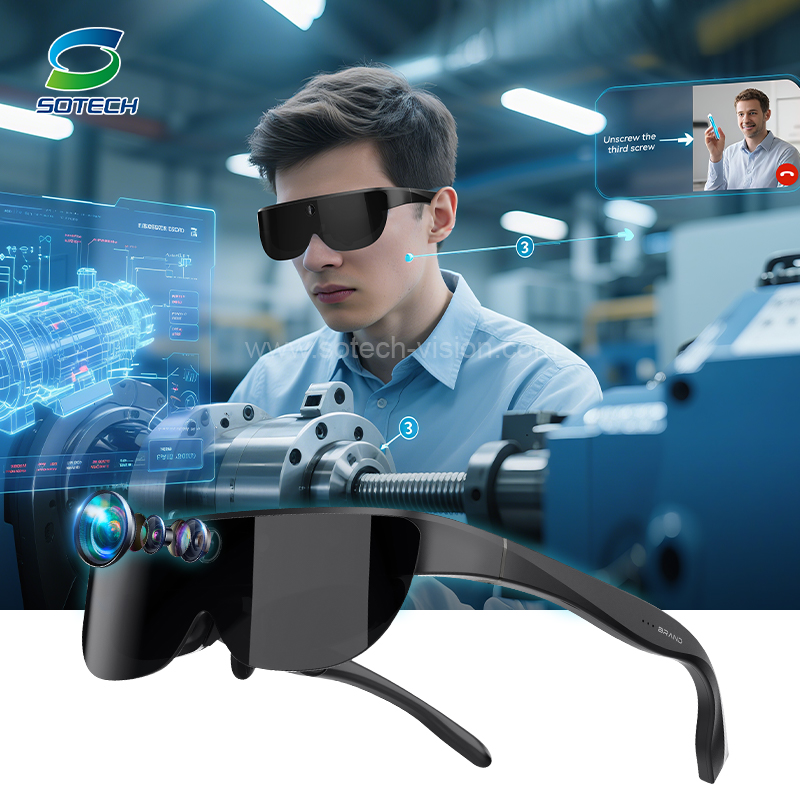
Evaluating "Birdbath AR Glasses With Camera" Architectures
The Integration Challenge
Integrating a central or stereoscopic camera system into a birdbath module severely complicates the hardware stack. The optical engine already occupies significant physical space in front of the user's eye. Engineers must squeeze image sensors, wiring, and image signal processors into an already crowded chassis. This integration effort forces difficult design compromises. Evaluating birdbath ar glasses with camera functionality requires strict attention to three core dimensions.
Key Evaluation Dimensions
Thermal Management
Cameras running advanced computer vision (CV) algorithms generate substantial heat. Processors analyzing spatial data run continuously. This heat source sits directly adjacent to the Micro-OLED panel and the user’s forehead. Human skin becomes uncomfortable around 43 degrees Celsius. Therefore, you must establish robust passive cooling criteria. Look for vendors utilizing graphene heat spreaders or miniature vapor chambers. Effective thermal management prevents hardware throttling and protects user comfort during extended shifts.
Weight and Center of Gravity
Birdbath modules are inherently thicker than flat glass. Adding camera sensors pushes the device's center of gravity significantly forward. This front-heavy design strains the wearer's nose bridge and neck. You must carefully evaluate head-mounting solutions to prevent facial fatigue. A poorly balanced device guarantees user rejection.
Head-Mounting Solutions Comparison
Mounting Style | Weight Distribution | Enterprise Viability | Common Mistakes |
|---|---|---|---|
Standard Temples | Rests heavily on the nose bridge and ears. | Low to Medium (Short tasks only). | Deploying for 8-hour shifts causes severe discomfort. |
Halo Strap System | Distributes weight across the crown of the head. | High (Ideal for prolonged use). | Ignoring hardhat compatibility during the selection phase. |
Counter-weighted | Places battery packs at the rear to balance front optics. | High (Best overall balance). | Adding too much total weight, causing neck strain. |
Computer Vision Efficacy
The optical physics require dark-tinted outer lenses. These dark shades prevent the bright Micro-OLED light from leaking outward. They also enhance perceived contrast. However, this dark tint sits squarely over the camera lenses. This physical barrier impacts the camera's dynamic range. Low-light performance drops significantly. Industrial environments often feature uneven lighting. You must test the CV tracking reliability inside your actual warehouses, not just in bright laboratories.
Birdbath vs. Waveguide: A Practical Enterprise Framework
Light Transmission and Safety Compliance
Enterprise hardware must prioritize worker safety above all else. You must understand how optical choices impact environmental awareness.
Birdbath Reality: This technology heavily limits real-world light transmission. Visibility often sits between 20% and 30%. The device fundamentally takes a "sunglasses" form factor. Discuss these implications thoroughly regarding OSHA compliance. Deploying dark lenses in active, hazardous environments introduces severe risks. Workers might miss tripping hazards. They experience reduced peripheral vision. You must restrict these devices in high-traffic zones containing forklifts or heavy machinery.
Waveguide Comparison: Waveguide technology offers high transparency. Light transmission often exceeds 70%. Workers maintain excellent situational awareness. However, this technology suffers from severe color fringing. Efficiency remains incredibly low, requiring massive battery power to drive acceptable brightness levels.
Environment Matching (Features-to-Outcomes)
Choosing the right display means matching the hardware strictly to the user's environment. We must map specific features to desired outcomes.
When to choose Birdbath: You should deploy this technology for deskless productivity. It excels as a virtual monitor replacement. Remote expert guidance benefits from the sharp image clarity. Static assembly stations where workers remain seated are perfect environments. Detailed 3D CAD reviews require the color accuracy and contrast this architecture provides.
When to avoid Birdbath: Do not use this technology for high-mobility tasks. Logistics workers navigating low-light warehouses will struggle. Avoid these optics in environments requiring constant, clear eye contact with retail customers. The dark lenses create a psychological barrier during interpersonal communication.
Optical Engine Comparison Chart
Feature | Birdbath Optics | Diffractive Waveguide |
|---|---|---|
Visual Contrast | Excellent (True Blacks) | Poor to Moderate (Grayish blacks) |
Light Transmission | Low (~25%) | High (>70%) |
Manufacturing Yield | Very High | Low (Complex nano-imprinting) |
Best Use Case | Stationary detailed tasks | Mobile hazardous environments |
Sourcing an OEM Birdbath Wearable: Vendor Shortlisting Logic
Manufacturing and Alignment Tolerances
Evaluating an OEM goes far beyond reading basic specification sheets. You must audit the vendor's yield rates and quality assurance protocols. Birdbath modules require precise physical alignment. If the manufacturer fails to align the left and right mirrors perfectly, the user suffers. Misaligned optics cause rapid binocular rivalry. The brain struggles to merge two slightly offset images. This leads to immediate eye strain, headaches, and nausea. Ask your potential partner for detailed reports on their optical calibration tolerances.
Customization Flexibility
Enterprise workforces require diverse ergonomic accommodations. Can the OEM modify the optical module for prescription (Rx) insert compatibility? This represents a critical barrier to scalable adoption. A significant portion of your workforce wears corrective lenses. If the headset cannot accept snap-in Rx lenses, those workers cannot use the tool safely. Choose vendors offering magnetic or clip-on prescription frames directly integrated into the nose bridge design.
Software and Sensor Payload
Hardware represents only half the battle. You must assess the software ecosystem. Determine whether the birdbath smart ar glasses allow low-level API access. Your internal development teams need raw access to the camera feed and IMU data. Custom enterprise software relies on this telemetry for precise spatial tracking. Some vendors force reliance on their proprietary middleware. Closed ecosystems restrict your ability to innovate. Always prioritize hardware platforms offering open SDKs and native Android support.
Implementation Risks and Mitigation Strategies
Ergonomics and Shift-Duration Viability
Real-world adoption fails dramatically if devices cause physical pain. Neck strain remains the number one complaint among industrial AR users. You cannot evaluate comfort during a ten-minute demonstration. Mandate strict pilot testing protocols. Operators must complete a minimum two-hour continuous wear test. Monitor them for pressure points around the ears and nose. Use the feedback to select proper counter-weighted strap accessories before purchasing the entire fleet.
The "Dark Visor" Effect
Address user resistance proactively. Workers frequently object to wearing tinted glasses indoors. It feels unnatural and isolates them from colleagues. You can mitigate this through intelligent software design. Ensure your software UI utilizes true black backgrounds. Because Micro-OLEDs turn off completely for black pixels, true blacks render as fully transparent in the headset. This maximizes real-world visibility. Avoid rendering large white background windows. Use floating UI elements instead.
Hardware Lifecycle Expectations
Set highly realistic assumptions about device durability. Enterprise deployments typically run on three-to-five-year cycles. You must plan for specific hardware degradation.
External Mirror Scratching: The front reflective surfaces are vulnerable. Mandate the use of snap-on protective shields. Replace these cheap plastic shields monthly to protect the expensive optics.
OLED Burn-in: Static UI elements will permanently burn into the display over years of use. Implement software screen savers. Program UI elements to shift slightly every few minutes.
Cable Degradation: Tethered devices suffer from cable fraying at the connection point. Select headsets utilizing standard, replaceable USB-C cables rather than proprietary hardwired connections.
Conclusion
Birdbath optics certainly do not represent a legacy technology. They stand as a deliberate, highly effective choice for modern enterprises. Leaders prioritize visual fidelity, text readability, and reliable manufacturing yields. These displays deliver exceptional contrast required for complex industrial tasks. While they demand thoughtful ergonomic and environmental planning, their maturity minimizes deployment friction.
Your next step requires decisive action. Initiate a limited Proof of Concept (PoC) focused entirely on your specific physical environment. Test the hardware under your actual warehouse lighting conditions. Measure the exact neck strain your workers experience over a full shift. By matching the technology to the precise operational reality, you guarantee a successful, scalable augmented reality rollout.
FAQ
Q: What are the main disadvantages of birdbath AR glasses?
A: The primary disadvantages involve bulk and low light transmission. The optical engine is physically thicker, making the glasses front-heavy. Additionally, they require dark-tinted lenses to operate, which severely reduces real-world visibility compared to highly transparent optical see-through waveguides. This makes them unsuitable for dark environments.
Q: Can a birdbath virtual display replace physical enterprise monitors?
A: Yes. Because Micro-OLED screens offer incredibly high angular resolution (PPD) and infinite contrast, a birdbath virtual display renders text beautifully. They easily support multi-monitor virtual setups for productivity, provided you carefully manage the ergonomic constraints of wearing the headset.
Q: Are birdbath AR glasses with camera functionality suitable for industrial environments?
A: They are highly suitable for specific tasks like remote assistance and barcode scanning. However, the physical environment must be well-lit. The user should remain relatively stationary due to restricted peripheral vision and the forward-heavy weight of the camera modules.


