


Consumer AR Glasses Weekly Charging: Lightweight Extended Battery Life Device
Views: 0 Author: Site Editor Publish Time: 2026-06-15 Origin: Site


Wearable technology faces a persistent friction point: battery anxiety versus physical wearing comfort. Current market options often force a difficult choice upon users. You either wear bulky headsets boasting usable battery life or choose sleek frames dying in just two hours. This compromise frustrates users seeking seamless daily integration. Achieving true consumer ar glasses weekly charging is technically feasible today. However, it requires a clear understanding of strict compromises. You must balance active display time, standby efficiency, and tethered power solutions. This article provides a skeptical, evidence-based framework for evaluating any lightweight AR device claiming multi-day or weekly battery endurance. We will explore the physics limits of batteries, tethering realities, and daily usage scenarios. By the end, you will know exactly what to look for before making a purchase.
Key Takeaways
"Weekly charging" claims generally assume 30–60 minutes of active display time per day mixed with ultra-low power standby.
True lightweight AR devices (under 80 grams) rely on external processing (phones/consoles) to preserve onboard battery.
Display technology (Micro-OLED vs. Micro-LED) and brightness settings dictate 70% of total power draw.
Buyers must evaluate battery capacity (mAh) alongside thermal management and charging protocols before committing.
The Engineering Trade-Off: Weight vs. Power in Consumer AR Eyewear
Engineers designing smart eyewear face a rigid physics problem. Lithium-ion batteries possess a fixed energy density. You cannot pack massive battery cells into slim frames without violating core ergonomic limits. Adding too much weight creates painful downward pressure on your nose bridge. Heavy batteries also shift the center of gravity forward, causing frames to slide down your face constantly.
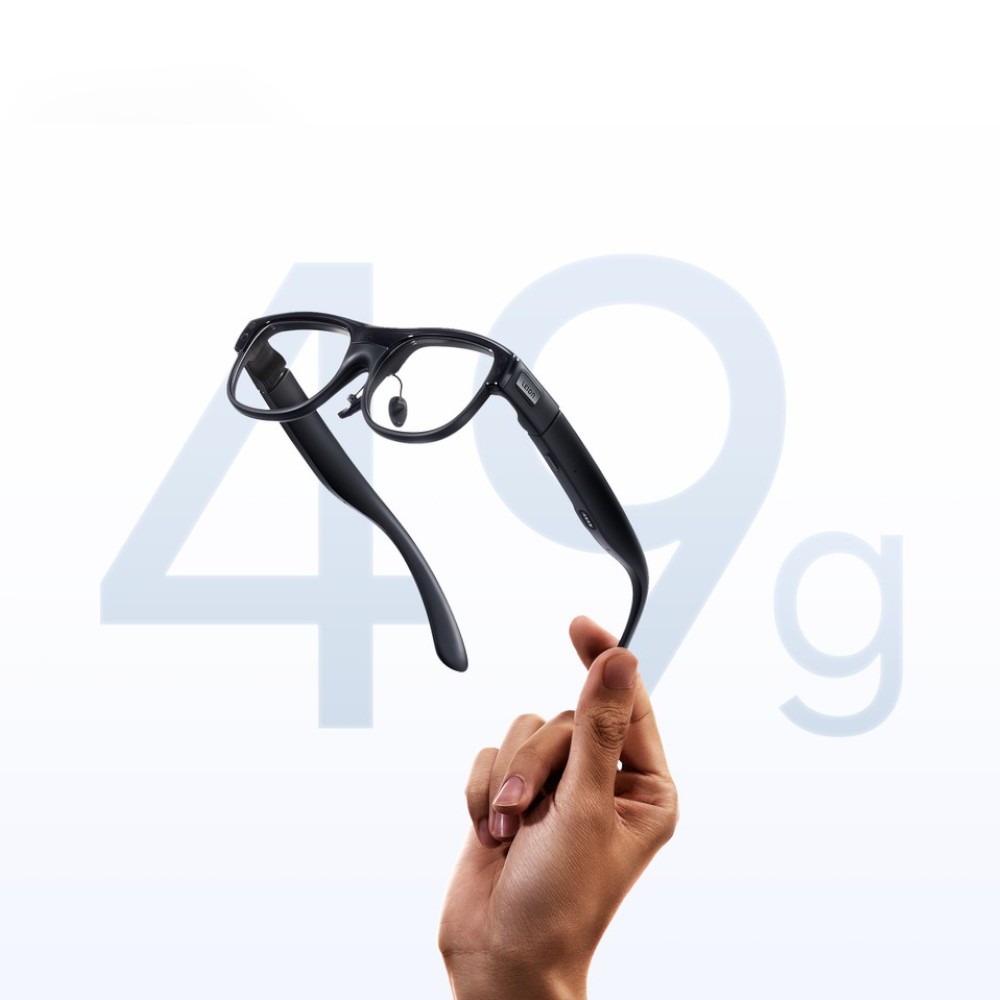
We must define the standard threshold for practical everyday use glasses. Industry standards generally target a total weight between 50 and 80 grams. Keeping within this tight parameter restricts the maximum battery size. Manufacturers usually fit a battery ranging from 150mAh to 300mAh inside the temples. For perspective, a modern smartphone holds a 4000mAh battery. This tiny onboard capacity means every milliwatt of power matters immensely.
Prolonged active use presents another significant hurdle. Running a display and processor continuously drains the battery rapidly. It also generates considerable heat. Skin temperatures exceeding 40°C quickly become uncomfortable for the wearer. Therefore, smart eyewear requires aggressive thermal management systems. These systems actively throttle performance to maintain a cool surface temperature.
Best Practice: Look for frames distributing battery weight behind the ears rather than above the lenses. This balances the device and reduces nose bridge fatigue.
Common Mistake: Ignoring the heat dissipation design. Buyers often chase high brightness specs but forget high brightness generates rapid, uncomfortable heat near the temples.
How Manufacturers Achieve "Weekly Charging" Claims
Marketing materials frequently promise seven days of battery life. These claims rely heavily on ultra-low power standby modes. Modern chipsets utilize aggressive sleep states when you remove the frames or look away. They power down the display entirely. The system only maintains a low-energy Bluetooth connection. This minimal drain allows the device to stay "on" and ready for days at a time.
Another crucial strategy involves offloading compute tasks. Many long battery smart glasses rarely process spatial data locally. Spatial mapping and rendering require massive processing power. Instead, manufacturers design the frames to tether to external devices. You connect them to smartphones or gaming handhelds like the Lenovo Legion Go or Steam Deck. By offloading computing tasks, the glasses act purely as a display monitor. This approach drastically reduces onboard power consumption.
Display technology also plays a massive role in endurance. A stark difference exists between monochrome and full-color displays. Devices achieving true seven-day active use often utilize low-draw monochrome Micro-LEDs. These displays work perfectly for projecting sports metrics, notifications, or teleprompter data. Conversely, full-color Micro-OLED displays render rich spatial video but drain batteries rapidly. A full-color cinematic experience simply cannot run for a week on a 200mAh battery.
When you see a multi-day battery promise, read the fine print. The manufacturer likely assumes you will use a monochrome display for brief interactions rather than watching full-length movies.
Evaluating Real-World Endurance: "A Day in the Life" Usage Scenarios
Battery performance varies wildly depending on your personal habits. We can break down real-world endurance into three distinct usage scenarios. Understanding these profiles helps you align manufacturer claims with reality.
Scenario A: The Notification & Navigation User
This user relies on intermittent interactions throughout the day. They check incoming messages, glance at calendar alerts, and use occasional turn-by-turn walking directions. The display remains off for 90% of the day. In this scenario, true weekly charging is entirely feasible. The aggressive sleep states handle the downtime perfectly.
Scenario B: The Productivity Worker
Productivity users deploy their frames as virtual monitors. They might use them for one to two hours daily while drafting documents or managing emails on flights. This constant display activation draws steady power. As a result, this user profile requires charging the frames every two to three days.
Scenario C: The Gamer/Media Consumer
Gamers and movie enthusiasts represent the highest power drain category. Continuous video streaming or 3D gaming pushes both the display and connection protocols to their limits. A standard lightweight frame will deplete its onboard battery in roughly three to five hours. This user faces daily charging requirements or must adopt external power solutions.
Summary of Active Usage Scenarios | |||
User Profile | Primary Activities | Daily Active Display Time | Expected Charging Frequency |
|---|---|---|---|
Notification/Navigation | Quick texts, walking directions | 15 - 30 minutes | Once a week |
Productivity Worker | Virtual monitors, reading | 1 - 2 hours | Every 2-3 days |
Gamer/Media Consumer | Gaming, streaming movies | 3+ hours | Daily (or multiple times daily) |
Always view battery specifications through a skeptic's lens. Manufacturers test their devices under highly controlled conditions. They usually test battery life at 30% display brightness in a temperature-controlled room. If you use your frames outdoors in bright sunlight, you will need 100% brightness. This single adjustment can cut your expected battery life in half.
The Role of External Battery Packs and Accessories
For heavy users, relying solely on internal batteries proves impossible. The industry provides a pragmatic workaround: external power solutions. These accessories bridge the gap between necessary ergonomic lightness and desired usage time. Magnetic battery packs and wearable neckband batteries have become popular solutions.
Using external accessories carries distinct advantages and disadvantages. You must weigh these before investing in a secondary power ecosystem.
Pros: External batteries extend your playtime indefinitely. You can swap packs mid-game. More importantly, they keep the heavy lithium cells off your nose bridge, preserving the physical comfort of the frames.
Cons: Accessories introduce cables draped across your clothing. They add secondary devices you must remember to charge. You may also face compatibility issues if the manufacturer uses proprietary charging ports instead of standard USB-C.
We must also address the hidden cost of tethering. When you connect consumer AR eyewear to a host device, power dynamics shift. Offloading the compute process saves the eyewear's battery. However, it forces your phone or console to work much harder. Pushing dual displays and rendering spatial data will drain your host device's battery up to 30% faster than normal. You solve the glasses' battery problem but create a new smartphone battery problem.
Decision Framework: Shortlisting Your Everyday Use Glasses
Navigating the crowded market requires a systematic approach. Do not rely on bold marketing headlines. Instead, use this specific four-point decision framework to evaluate potential frames.
Battery Chemistry and Capacity: Always check the raw milliampere-hour (mAh) rating. Look for a minimum baseline of 200mAh for basic daily use. Anything smaller will struggle to last through a busy afternoon of notifications.
Fast Charging Capabilities: If weekly charging proves unrealistic for your specific needs, focus on charging speed. Evaluate whether the device supports 0-80% fast charging in under 30 minutes. Rapid top-ups during a coffee break often negate the need for massive internal batteries.
Brightness-to-Power Ratio: Outdoor usability requires high nits. Ensure the glasses offer sufficient brightness without causing immediate battery freefall. Some newer micro-displays offer better efficiency, giving you high brightness at a lower energy cost.
Software Optimization: Hardware only tells half the story. Evaluate the companion application. Does it offer customizable power profiles? Look for frames featuring proximity sensors. These sensors automatically turn off the display the moment you take the frames off your face, saving crucial energy.
Applying this framework prevents buyer's remorse. You will clearly see which devices align with your actual daily habits rather than idealized testing scenarios.
Conclusion
Achieving a weekly charging cycle is an attainable reality for a specific subset of intermittent, notification-heavy users. However, it remains a marketing stretch for power users, productivity workers, and gamers. Physics still dictate the boundaries of wearable technology. You cannot out-engineer the weight and heat limitations of current lithium-ion batteries.
We recommend prioritizing physical wearing comfort above all else. Choose a lightweight frame you can comfortably wear for eight hours. Accept external battery solutions or tethering for your high-drain scenarios. Waiting for a magical, weightless battery technology will keep you on the sidelines of current spatial computing advancements.
Map your specific daily active screen time before comparing models. Determine exactly how many continuous hours you need. Once you have your baseline, check trusted product comparison guides to find the exact frame matching your endurance needs.
FAQ
Q: Can I play games on AR glasses for a full week without charging?
A: No. Continuous video rendering and gaming draw significant power. Expect roughly 2 to 5 hours of continuous use depending on the device. Heavy gaming requires daily charging or the use of external battery packs.
Q: Do AR glasses drain my phone's battery?
A: Yes. If the frames are tethered wirelessly or via cable to offload processing, your phone assumes the computing burden. Your smartphone will experience noticeably faster battery depletion as a result.
Q: Will fast charging degrade the battery in my smart glasses?
A: Like all lithium-ion batteries, frequent fast charging accelerates long-term degradation. Deep depletion, such as letting the device drop to 0%, also harms battery health. Micro-batteries inside eyewear are particularly sensitive to heat generated during rapid charging.
Q: Are there external battery packs made specifically for AR glasses?
A: Yes. Third-party manufacturers and first-party brands offer tailored wearable battery accessories. You can find magnetic clip-on packs and neckbands designed to distribute weight away from your face while extending usage time.


