


Birdbath AR Glasses With Camera: Immersive Virtual Theater Experience
Views: 0 Author: Site Editor Publish Time: 2026-06-10 Origin: Site


Modern buyers face a highly challenging dilemma today. They must actively balance cinematic, high-contrast visual fidelity against crucial spatial awareness. Adding an integrated camera system further complicates this major buying decision. Wearable technology evolves rapidly across various consumer electronics sectors. Transparent waveguide technology clearly wins on creating a sleek, everyday form factor. However, Birdbath optics remain the absolute gold standard for pure media playback. They provide unmatched color depth and stunning visual clarity.
We will thoroughly explore an objective framework for evaluating these advanced wearables. You will soon understand the underlying optical physics and inevitable hardware constraints. We also detail the real-world software ecosystems governing daily usability. This comprehensive guide helps you confidently navigate the complexities of modern optical technology. You can make an informed choice suited perfectly for long-term immersive enjoyment.
Key Takeaways
Birdbath optics deliver superior contrast, color gamut, and Field of View (FOV) necessary for a viable virtual theater experience, outperforming current waveguide alternatives in media consumption.
Integrating a camera into a Birdbath module introduces specific tradeoffs in weight, thermal management, and battery life that buyers must quantify.
True device utility depends heavily on "split-type" architecture (tethering to external processing/power) and DRM-compliant software ecosystems.
Edge-to-edge clarity and prescription (Rx) insert compatibility are the primary failure points for user adoption in extended viewing scenarios.
Why Birdbath Optics Dominate the "Virtual Theater" Category
Optical engineers rely on specific physics to create true immersion. Birdbath optics utilize a specially curved mirror system. They bounce bright light originating from an OLED micro-display directly into your eye. The display module usually sits hidden just above the user's eyebrow line. The downward light hits the curved mirror and reflects outward. This elegant physical bounce creates a massive, perceived projection space. You feel entirely surrounded by the digital content. This setup easily outperforms traditional flat screens.
We evaluate these headsets using strict visual fidelity metrics. The contrast ratio stands out as the most vital performance indicator. High-quality OLED panels combined with Birdbath lenses frequently hit a 100,000:1 contrast ratio. This capability delivers exceptionally deep black levels. You will typically perceive a massive screen size. Many users report seeing a 130-inch display floating roughly four meters away. Such precise optical scaling creates an incredibly compelling media consumption environment. You essentially wear a private cinema on your face.
However, you must accept a significant light transmittance tradeoff. Inherent skepticism often surrounds these specific wearable devices. Birdbath lenses typically allow only twenty to thirty percent of external ambient light through. This heavy tint creates a permanent "sunglasses effect." Walking safely outdoors becomes quite difficult. Yet, this exact limitation functions as a massive advantage indoors. It turns the headset into outstanding virtual theater glasses. The darkened background heavily isolates the cinematic content. It blocks out distracting room elements perfectly. You gain a flawless private cinema experience.
Evaluating the Impact of an Integrated Camera on AR Eyewear
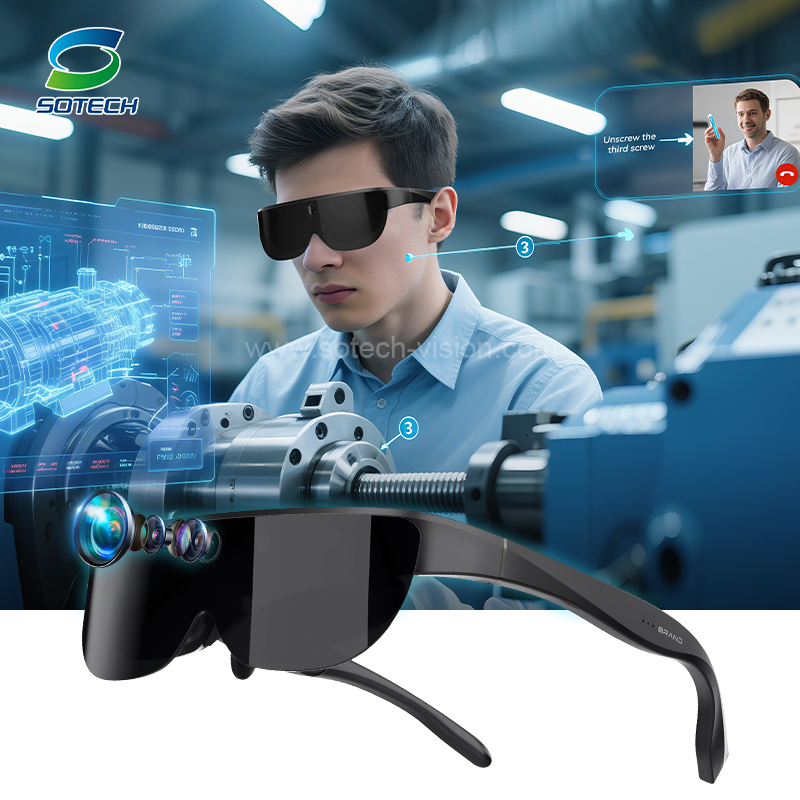
Adding optical sensors fundamentally changes how you use AR eyewear. We must define what an integrated camera actually accomplishes within a Birdbath setup. The sensor rarely functions like a traditional smartphone camera. Instead, it unlocks highly specific functional use cases.
First-Person View (FPV) Recording: You can capture video exactly from your own eye level. This proves useful for training documentation.
Basic Spatial Anchoring: The camera detects your surrounding walls. It allows you to pin digital screens to a specific physical location.
QR and Marker Tracking: The system reads specialized codes. It triggers specific 3D animations or opens targeted digital workflows.
You must understand the harsh realities of camera pass-through capabilities. Birdbath lenses feature very heavy optical tinting. Relying strictly on camera pass-through for mixed reality presents unique challenges. The digital representation of your physical room often looks grainy or dark. This experience is fundamentally different than wearing dedicated virtual reality headsets. Dedicated VR devices use massive front-facing sensors. They recreate your room dynamically. A birdbath ar glasses camera primarily supplements the media experience. It rarely replaces natural human vision effectively.
Furthermore, you face significant hardware overhead. Integrating active camera systems introduces specific costs you cannot ignore.
Thermal Output Issues: Active camera sensors continuously process visual data. They generate noticeable heat directly near your brow line.
Heavy Power Draw: Active optical sensors demand significant electrical current. They drain the battery of your tethered smartphone much faster.
Privacy and Compliance Restrictions: Modern laws require visible indicator lights during recording. This flashing light can distract you. It also limits usage inside secure enterprise spaces.
Key Decision Criteria for High-Fidelity AR Video Glasses
Selecting the right hardware requires careful metric analysis. You must move far beyond standard marketing claims. Brands love advertising "4K resolution" across their product lines. However, raw pixel counts mean very little in near-eye optics. You should instruct your procurement team to focus entirely on Pixels Per Degree (PPD). This metric defines actual visual sharpness.
Hardware Metric | Standard Consumer Standard | High-Fidelity Ideal Target | Primary User Benefit |
|---|---|---|---|
Pixels Per Degree (PPD) | 30 - 35 PPD | 40+ PPD | Ensures sharp text and artifact-free movie playback. |
Frame Weight | 100+ grams | Under 85 grams | Prevents severe nose bridge fatigue during long movies. |
Optical Contrast | 10,000:1 | 100,000:1 (OLED) | Provides absolute deep blacks for cinematic immersion. |
You need a device featuring a PPD of 40 or higher. This density ensures you can read small digital text comfortably. It also guarantees artifact-free movie viewing. Lower PPD ratings inevitably cause a distracting "screen door effect." You will actively notice the tiny gaps between individual pixels.
Edge-to-edge sharpness represents another critical engineering hurdle. Many affordable AR video glasses suffer from a massive design flaw. They maintain perfect sharpness in the direct center. However, their outer peripheries blur significantly. This optical distortion forces you to move your entire head constantly. You cannot simply glance at subtitles using your eyes alone. You must manually center the text within the sweet spot. We highly recommend testing peripheral clarity before committing to a purchase.
Weight distribution directly dictates your long-term ergonomic comfort. Adding an active camera sensor makes the frame inherently front-heavy. The entire optical module rests directly on your nose bridge. An acceptable weight threshold sits firmly under 85 grams. Exceeding this limit causes noticeable physical pain during extended movie watching sessions.
Finally, carefully assess the directional audio privacy. Acoustic design plays a huge role in public environments. You want to hear booming cinematic audio clearly. However, you do not want to bother the passenger sitting next to you. Premium models feature phased array speakers. These speakers cancel out sound leakage automatically. The acoustic energy focuses strictly into your ear canal.
Implementation Realities: Setup, Ecosystem, and Limitations
True virtual theater devices rarely function as standalone computers. They rely entirely on a "split-type" system architecture. You will not find heavy internal batteries or bulky processors inside the frame. Instead, you must use a physical tether. You connect the glasses via a USB-C DisplayPort Alt Mode cable. Your smartphone, laptop, or a dedicated media puck handles all active processing tasks.
You must pay incredibly close attention to Digital Rights Management (DRM) protocols. Many buyers purchase these glasses strictly for streaming movies. However, they encounter severe app compatibility issues immediately. High-bandwidth Digital Content Protection (HDCP) causes widespread frustration. Your display hardware might boast pristine optical quality. Yet, the host ecosystem can actively block video output. Netflix, Hulu, and Prime Video frequently restrict external display mirroring. If the hardware lacks proper HDCP handshakes, you will only see a black screen. The entire theater use-case fails completely.
Vision correction represents the final major implementation hurdle. Many buyers mistakenly assume they can wear smart glasses over traditional eyeglasses. This stacking method completely ruins the optical geometry. It drastically reduces your field of view. It also breaks the immersive seal. You must utilize magnetic prescription (Rx) inserts. You take these metal frames to your local optometrist. They cut custom lenses to match your exact visual needs. The inserts then snap magnetically onto the inner nose bridge. This ensures flawless visual alignment without sacrificing physical comfort.
Shortlisting Logic: Which Immersive Display Device Fits Your Needs?
Choosing the ideal immersive display device requires aligning the hardware with your core value proposition. Different user groups prioritize entirely different hardware features. We categorize the shortlisting process into clear logical branches.
Primary Use Case Focus | Must-Have Hardware Features | Features You Can Safely Ignore |
|---|---|---|
Pure Media & Movie Consumption | Maximum FOV, OLED tuning, lightest possible frame weight. | Integrated cameras, 6DoF tracking, spatial mapping sensors. |
Productivity & Virtual Multi-Screen | Edge-to-edge text clarity, robust screen pinning software. | Deep black contrast ratios, ultra-high refresh rates. |
Mixed Reality & Spatial Computing | Reliable camera sensors, robust 3DoF/6DoF tracking. | Ultra-lightweight design (these units naturally weigh more). |
If you prioritize purely media consumption, focus entirely on visual parameters. Look for the maximum possible FOV. Ensure the manufacturer tuned the OLED panel for cinematic color accuracy. You likely do not need a built-in camera. Skipping the camera keeps the overall weight perfectly manageable.
Conversely, productivity users require reliable spatial tracking. You need an active camera system to anchor multiple virtual screens around your desk. You also demand absolute edge-to-edge clarity. Reading spreadsheets requires uniform optical sharpness across the entire lens surface.
Cost versus capability also dictates your final tier selection. You must establish realistic baseline pricing expectations. Consumer-grade media viewers remain relatively affordable. They strip away complex spatial sensors. Prosumer models naturally cost significantly more. They include advanced spatial cameras and specialized software licenses.
We recommend specific next steps before finalizing your purchase order.
Identify the exact host device you plan to use daily.
Verify this specific device formally supports USB-C DisplayPort Alt Mode.
Order your custom magnetic prescription inserts immediately upon purchasing the headset.
Test plug-and-play compatibility with DRM-heavy apps like Netflix during the initial return window.
Conclusion
The strategic combination of Birdbath optics and spatial cameras offers a highly specific utility. You gain a powerful, portable digital environment. This setup excels uniquely at private media consumption and basic spatial computing tasks.
You must openly accept the inherent physical tradeoffs. The heavily tinted lenses severely limit outdoor mobility. The strict requirement for tethered power restricts complete wireless freedom. However, these calculated compromises grant you unmatched cinematic quality on the go.
Take immediate action by thoroughly reviewing targeted technical specification sheets. Verify the stated PPD exceeds acceptable thresholds. Check the exact gram weight of the frame. Finally, confirm HDCP compliance to guarantee a frustration-free streaming experience.
FAQ
Q: Do Birdbath AR glasses work outdoors in bright sunlight?
A: They struggle in direct sunlight. The internal OLED panels have strict brightness limits. Strong external sunlight washes out the projected digital image. Manufacturers use electrochromic dimming or physical light shields to block sunlight. However, walking safely remains difficult due to the heavy lens tinting.
Q: Can the integrated camera function as a standard PC webcam?
A: Generally, no. Most manufacturers lock the camera feed through proprietary software. Standard Windows or Mac USB drivers rarely recognize the headset sensor as a generic webcam. You can only use the camera feed within specific, approved spatial applications.
Q: What causes motion sickness in virtual theater glasses?
A: Motion sickness stems from low refresh rates and noticeable 3DoF tracking latency. When you move your head, the digital screen lags slightly behind your physical motion. Using "pinned-screen" mode often causes more nausea than "fixed-screen" mode if the tracking software performs poorly.
Q: Can others see what I am watching?
A: Yes, mild light leakage occurs. The internal optics bounce light toward your eye, but some illumination escapes outward through the front lenses. Observers will notice a faint "glowing eyes" effect. They might see blurred shapes, but they cannot distinguish specific text or detailed video frames.


