


AI Livestream Smart Glasses: First Person View Recording Device
Views: 0 Author: Site Editor Publish Time: 2026-06-12 Origin: Site


The landscape of content capture is rapidly shifting. We are moving away from awkwardly holding smartphones to deploying fully hands-free, eye-level broadcasting solutions. This evolution brings a significant technical challenge for creators. Manufacturers must carefully balance form factor variables like weight and aesthetics against massive processing power demands. Devices need robust AI encoding capabilities, adequate battery life, and efficient thermal management during continuous live video transmission.
This guide exists to establish an objective evaluation framework for modern wearable recording tech. We will help creators and professionals select the right hardware based on actual technical realities rather than flashy marketing hype. You will discover exactly what separates functional broadcasting gear from mere novelties. We will cover essential metrics ranging from optical stabilization and battery limits to native social platform integrations. By the end, you will know exactly how to evaluate a device for your specific field environment.
Key Takeaways
True AI livestream smart glasses require a delicate trade-off between battery life, heat dissipation, and stream resolution.
Platform integration dictates utility; direct API access (e.g., native Instagram/TikTok broadcasting) drastically outperforms standard Bluetooth bridging.
For professional or extended use, FPV smart glasses must be evaluated on microphone array quality (wind noise reduction) just as much as camera specs.
Privacy compliance and clear recording indicators (LEDs) are non-negotiable for public use.
Defining Success Criteria for Hands-Free Broadcasting
Traditional smartphone recording presents several physical limitations. Chest mounts severely restrict your mobility. They prevent you from turning your perspective naturally. Hand-held devices force you to break eye contact with your subjects. You constantly look down at a screen instead of engaging with the environment. Both methods fail to capture a truly authentic, first-person perspective.
To measure the success of live streaming eyewear, we must look beyond basic camera specifications. Real return on investment comes from operational efficiency. You should evaluate success through three primary lenses:
Reduced Setup Time: You eliminate tripods, gimbals, and complex audio routing. You simply put the frames on and start streaming.
Increased Viewer Retention: Immersive point-of-view angles keep audiences engaged longer. Viewers feel they are experiencing the event alongside you.
Dual-Handed Operation: You can demonstrate products, ride a bicycle, or perform repairs while maintaining a stable broadcast feed.
We must also acknowledge current technological boundaries. Wearable broadcasting devices cannot replace dedicated mirrorless cameras for cinematic filmmaking. They lack the sensor size required for massive dynamic range. Their true value lies entirely in immediacy. You gain unencumbered mobility and the ability to share authentic, spontaneous moments as they happen.
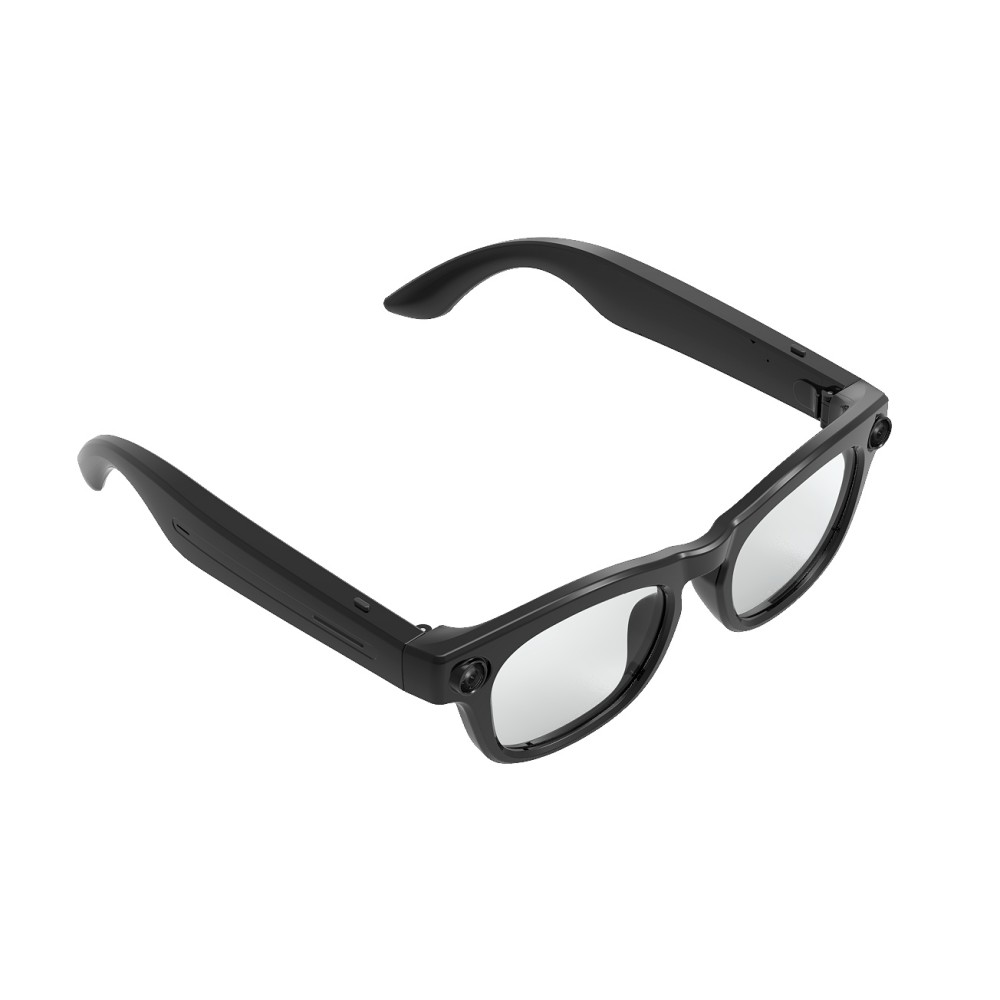
Essential Evaluation Dimensions for AI Camera Glasses
Optical Hardware and FPV Realities
Evaluating AI camera glasses starts with understanding the optical trade-offs inherent in tiny frames. Field of View (FOV) plays a critical role in capturing environmental context. Ultra-wide lenses pull in peripheral details perfectly. However, this introduces heavy barrel distortion at the edges. The device must deploy aggressive AI distortion correction to flatten the image in real-time. This correction demands massive processing power, which directly impacts battery drain.
You also need realistic expectations regarding sensor limitations. Wearable frames house microscopic image sensors. These small sensors struggle to capture adequate light in dim environments. You will likely notice grain or noise when broadcasting indoors or at night. Frame rates often drop to compensate for low light exposure.
Stabilization remains another critical evaluation point. Physical Optical Image Stabilization (OIS) requires moving lens elements. These elements simply do not fit inside slim eyewear frames. Therefore, AI-driven Electronic Image Stabilization (EIS) has become the industry standard. EIS crops into the sensor and uses algorithms to smooth out bumps. You must watch out for noticeable warping artifacts during fast head movements. Poorly tuned EIS makes footage look artificial and jittery.
Thermal Management and Battery Constraints
Heat presents the largest engineering hurdle for wearable broadcasting devices. Continuous video encoding generates incredible temperatures. AI auto-framing algorithms add to the processing load. Pushing a high-definition video feed wirelessly over Wi-Fi creates even more thermal stress. All this heat generates just millimeters from your face. Device manufacturers must strictly throttle performance to prevent skin burns.
Transparent benchmarks are crucial when planning your production schedule. Below is a realistic expectation table for current thermal and battery performance during continuous broadcasting:
Broadcast Quality | Network Tether | Expected Runtime Before Throttling/Depletion | External Charging Case Required? |
|---|---|---|---|
1080p / 60fps | Wi-Fi Direct + 5G | 25 - 30 Minutes | Yes (Critical for multi-session use) |
1080p / 30fps | Wi-Fi Direct + 4G LTE | 35 - 45 Minutes | Yes (Recommended) |
720p / 30fps | Bluetooth / Standard Wi-Fi | 50 - 60 Minutes | Optional |
You should always expect maximum runtimes of roughly 30 to 45 minutes for high-quality feeds. Once the thermal limit is reached, the glasses will automatically shut down the camera to cool off. You must rely on external charging cases to top up the battery between short streaming bursts.
Audio Capture and AI Noise Cancellation
Crisp audio often matters more than perfect video quality. Viewers will tolerate grainy footage, but they will immediately leave a stream with distorted sound. Professional frames require sophisticated microphone arrays. A single microphone cannot distinguish your voice from traffic noise. Multi-mic setups capture audio from different directions. The processor then compares these inputs to isolate the wearer's voice.
Wind resistance defines the quality of outdoor broadcasts. Cycling, running, or even walking on a breezy day ruins standard microphone audio. Advanced AI algorithms now exist to specifically strip wind rumble in real-time. They map the acoustic signature of wind sheer and digitally subtract it from your vocal frequencies. You should always test this feature rigorously if your primary deployment involves outdoor sports.
Platform Integration and Connectivity Architecture
Hardware specifications mean very little if you cannot reliably connect to your audience. The software bridge between your glasses and the broadcasting platform dictates your overall experience. You must differentiate between native integrations and complex workarounds. True social media glasses offer native app APIs. You simply open Instagram or Facebook, and the app instantly recognizes the glasses as a primary camera. This provides a frictionless, tap-to-stream experience.
Conversely, some devices require third-party RTMP (Real-Time Messaging Protocol) setups. You must copy and paste stream keys into generic companion apps. This introduces setup delays and potential point-of-failure risks during live events.
You must also understand the smartphone tether requirement. Most modern frames do not include onboard cellular modems. Fitting SIM cards and 5G antennas inside eyewear remains physically impossible without creating bulky designs. Instead, devices rely on Wi-Fi or Bluetooth 5.3 to tether to your smartphone in your pocket. Your smartphone handles the actual heavy lifting of uploading the data to the cloud. Therefore, your broadcast stability depends entirely on your phone's cellular network connection.
Content formats dictate how we process sensor data. Social platforms prioritize vertical 9:16 video. However, camera sensors inside glasses are typically mounted in a landscape orientation. Companion apps use AI auto-framing to solve this. The software takes the ultra-wide landscape feed and dynamically crops a vertical slice out of the center. The AI tracks subjects within that wide field, panning the vertical crop left or right to keep the action centered for TikTok or Reels.
Implementation Risks, Privacy, and Compliance
Deploying wearable recording technology in public spaces introduces distinct social friction. People often feel uneasy when interacting with someone wearing a camera. This "creep factor" can severely damage public trust. You must navigate these social waters carefully, especially when filming crowded events or private interactions.
Hardware indicators serve as a mandatory ethical safeguard. Clear, un-blockable LED recording lights are non-negotiable. Many regions have strict privacy laws dictating that individuals must know when they are being recorded. If a device allows you to disable the front-facing recording LED, it creates massive compliance liabilities for your brand. High-visibility lights ensure transparency with the public.
Data handling presents another crucial risk layer. You must evaluate where the AI processing actually happens. Edge computing handles tasks directly on the device processors. This keeps your raw data relatively secure. Cloud computing sends your visual data to external servers for processing. You must read the manufacturer's terms of service carefully. Determine exactly who owns the biometric and visual data captured by your lenses.
Finally, prepare for adoption friction. Transitioning to head-mounted controls requires a learning curve. Touch-sensitive temple arms rely on specific gesture controls like swiping or tapping. Voice commands often misinterpret accents or fail in loud environments. Companion app syncing issues can delay your broadcast. You must practice the exact sequence of starting, stopping, and saving streams before going live.
Shortlisting Logic: Which Smart Glasses Fit Your Use Case?
Selecting the ideal hardware requires mapping features strictly to your daily deployment environment. No single device excels across all categories. You must prioritize specific metrics based on your professional role.
Below is a functional comparison chart outlining the core priorities for different user profiles:
User Profile | Primary Focus | Crucial Hardware Features | Ideal Connectivity |
|---|---|---|---|
Social Media Influencers | Engagement & Ease of Use | Aesthetic frame design, fast charging cases, vertical cropping. | Native platform APIs (Instagram, Meta, TikTok). |
Field Service & Training | Reliability & Enterprise Integration | High-resolution text legibility, safety-rated lenses (ANSI). | RTMP protocol support for closed corporate networks. |
Action & Sports Creators | Durability & Stabilization | Rugged IP rating, aggressive EIS, extreme wind noise reduction. | Local onboard storage fallback, robust Wi-Fi tethering. |
You can clearly see how priorities shift. An influencer needs stylish frames that stream natively to social apps. A warehouse technician needs durable safety frames that push data to a proprietary remote-assistance software.
Before executing a bulk purchase of any ai livestream smart glasses, you should follow this critical action list:
Audit your primary broadcast platform's API compatibility with the manufacturer's companion app.
Test a single evaluation unit specifically for thermal limits under your actual environmental conditions (e.g., direct summer sunlight vs indoor air conditioning).
Verify the multi-microphone array performance in a highly congested, noisy environment.
Confirm that external charging cases can reliably recharge the frames multiple times during a standard work shift.
Conclusion
Wearable broadcasting devices have officially moved past the novelty phase. They provide incredible utility for creators needing authentic, unencumbered perspectives. However, buyers must fully accept current physical limitations regarding continuous battery life and heat dissipation. You cannot expect hours of uninterrupted, high-definition streaming from a lightweight frame.
Success depends entirely on aligning your purchase with your primary deployment environment. Indoor social broadcasting requires vastly different specifications compared to outdoor action sports. Evaluate the microphone arrays carefully, mandate privacy indicators for public use, and always test thermal throttling limits. By grounding your expectations in technical reality, you can transform how you share your viewpoint with the world.
FAQ
Q: Can I get prescription lenses for AI camera glasses?
A: Yes. Many manufacturers partner with third-party opticians to provide custom prescription lenses. Some brands allow you to order RX versions directly from their official websites during checkout. Always verify that swapping lenses post-purchase does not void the device's warranty or damage the internal ribbon cables.
Q: How long can FPV smart glasses livestream before overheating?
A: You should generally expect between 30 and 60 minutes of continuous broadcasting. This timeline depends heavily on your chosen video resolution and ambient room temperature. Direct sunlight and 1080p encoding will trigger thermal safety shutdowns much faster than indoor 720p streaming.
Q: Do live streaming glasses work without a smartphone?
A: Most devices require a smartphone tether to operate. They lack onboard cellular modems. They use Bluetooth or Wi-Fi Direct to push the video feed to your phone, which then uploads the data to the cloud. A few models offer limited local storage, but live broadcasting mandates a connected phone.
Q: Can I stream directly to YouTube or Twitch?
A: This depends on the software ecosystem. Devices with RTMP support allow you to manually configure streams to YouTube or Twitch. However, frames locked into closed ecosystems often limit direct API broadcasting exclusively to their parent company's social networks.


