


MicroLED — Lighting Up The Future of AR Smart Glasses
Views: 0 Author: Site Editor Publish Time: 2025-11-30 Origin: Site


AR glasses consist primarily of an optical display module, processor, sensors, memory, and battery. The optical display module alone makes up more than 40% of the cost, making it one of the most core components. It directly determines the device's visual experience, physical size, and overall performance. Essentially, it is a miniature projection system that creates and projects digital information in front of the user, blending it seamlessly with the real world.
The Structure of AR Smart Glasses Display Modules
The key components of a display module include the micro-display, optical module, sensors, processor, and light source. The light source provides illumination for the display, commonly using LEDs or RGB lasers. The micro-display acts as a "chip screen" that generates virtual images, with current technological options such as LCoS, OLED, and MicroLED. The optical system is responsible for transmitting and magnifying the image from the micro-display into the user's eyes. Optical lenses, including concave lenses, convex lenses, mirrors, and waveguide lenses, utilize the principles of light propagation to project the virtual image onto the user's retina. Among these, waveguide lenses are particularly advantageous due to their lightweight nature.
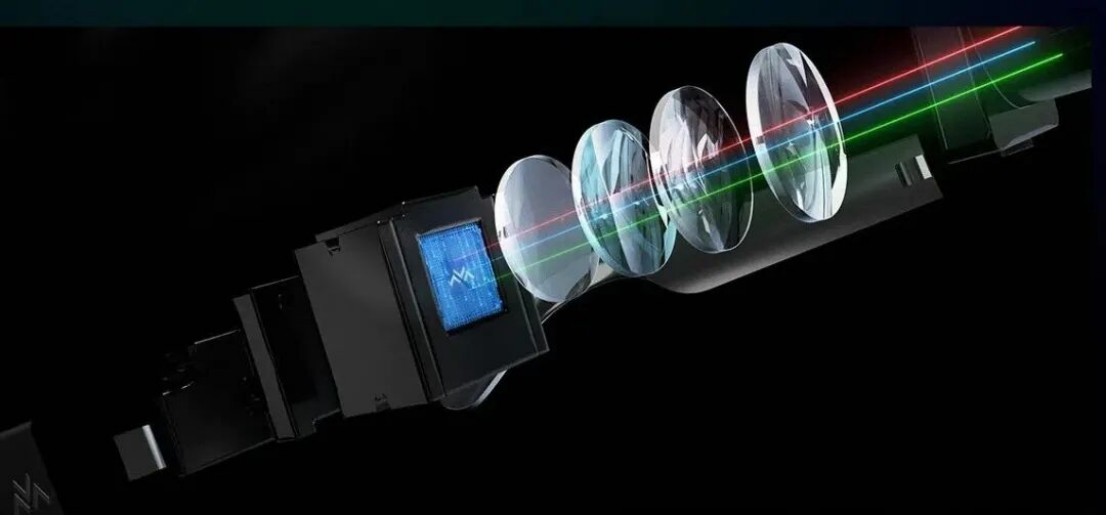
Comparison of Display Technology Pathways
Several micro-display technologies are currently employed in AR smart glasses, including LCoS, OLED, LBS, DLP, and MicroLED.
Technology LCoS LBS MicroOLED MicroLED Display Principle Reflective Liquid Crystal Laser Beam Scanning Self-Emissive Self-Emissive Key Features Mature technology, cost-effective Ultra-compact, high optical efficiency High contrast, excellent color gamut, relatively compact Ultra-high brightness, low power consumption, long lifetime, compact Key Limitations Bulky form factor, requires external backlight, high power consumption Complex system design, susceptible to laser speckle Limited peak brightness, risk of image retention, shorter lifespan Difficult to achieve full color, significant technical hurdles, high cost Among these, LCoS, LBS, and DLP solutions typically have a volume exceeding 1 cm³. In contrast, the latest MicroLED optical engines have shrunk this volume down to just 0.15 cm³—comparable to the size of a red bean—and weigh a mere 0.3 grams. Given the importance of user comfort and product battery life, smart glasses are not suitable for heavy or bulky display modules. The MicroLED micro-display, with its minimal form factor, is thus paving the way as the ideal light engine for truly lightweight AR devices.
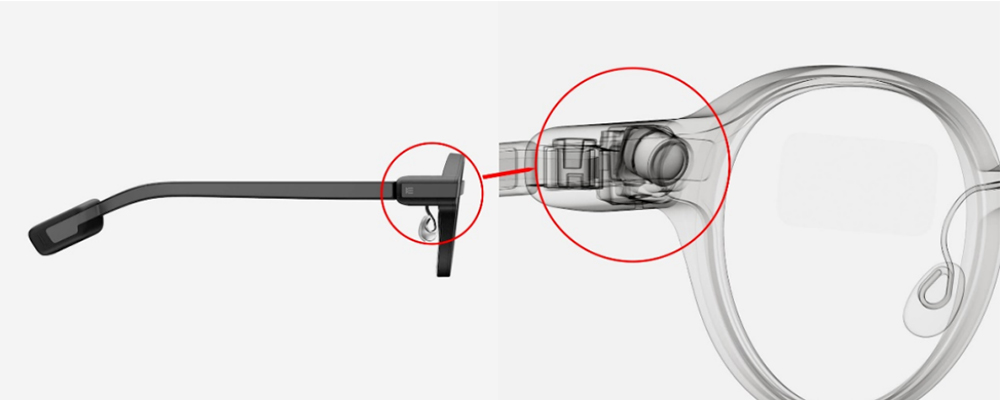
Location of the Light Engine on AR Glasses
LCoS has become a mainstream and reliable solution for many enterprise-grade AR glasses, thanks to its well-balanced equilibrium between technological maturity, cost, and display performance. MicroLED, on the other hand, is widely regarded as the future of displays. It boasts a high pixel density, extreme brightness, low response time, low power consumption, long lifetime, high color saturation, exceptional reliability, and a compact form factor. It is considered the pivotal technology with the potential to drive AR glasses toward all-day, outdoor use.
How MicroLED Works
MicroLED, at its core, is a micro-scale light-emitting diode with self-emissive capabilities. It utilizes inorganic materials (such as GaN - Gallium Nitride), which provide stable physical and chemical properties. This eliminates the need for complex packaging processes and enables an exceptional lifespan of up to 100,000 hours. Furthermore, MicroLEDs offer superior resistance to light and heat, are less prone to aging, and eliminate the risk of image retention (burn-in).
The manufacturing of MicroLEDs involves eight major processes and over two hundred detailed steps. Key processes include epitaxial wafer growth, bonding and debonding, photolithography, etching, thin-film deposition, electrode fabrication, chip dicing, packaging, as well as testing and sorting. The technology employs an array of micron-scale LEDs as pixel units. By using drive circuits to control each micro-LED pixel to emit light independently, and combining substrate and packaging technologies, it achieves high-resolution and high-brightness image display.
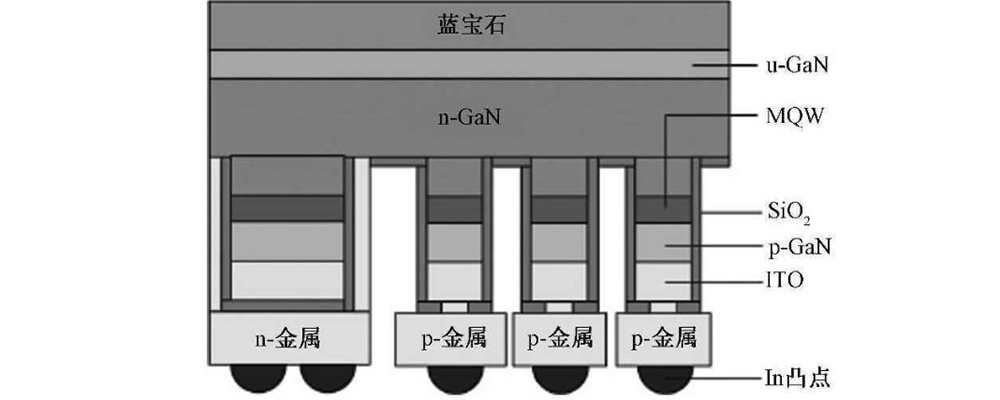
MicroLED Structural Diagram
The Development Status of MicroLED in Smart Glasses
According to forecasts by TrendForce, the market size for AR devices is expected to reach 25.5 million units by 2030, with MicroLED's market share projected to grow to 44%. Tech giants like Apple and Meta are actively investing in MicroLED R&D. Since 2025, nearly 16 AR glasses models featuring MicroLED displays have been unveiled.


