


AR AI Smart Glasses: Ultra Lightweight Augmented Reality Device
Views: 0 Author: Site Editor Publish Time: 2026-06-08 Origin: Site


Transitioning from bulky headsets to ultra-lightweight form factors is the primary catalyst for enterprise and premium consumer adoption of AR technology. You no longer need heavy, restrictive rigs to overlay digital information onto the real world. Modern devices bridge the gap between passive wearable displays and active, context-aware assistants by integrating generative AI and spatial computing. They see what you see and process it in real time. However, assessing these devices requires navigating complex hardware specifications and opaque software ecosystems. Our intent here is to establish a clear framework for evaluating hardware trade-offs, AI capabilities, and deployment realities. We want to separate highly scalable solutions from mere marketing hype. You will learn how optical architectures affect usability, why thermal management dictates processing limits, and how to structure a successful pilot program. This guide provides the tactical knowledge needed to navigate the hardware landscape effectively.
Key Takeaways
Ultra-lightweight form factors demand strategic trade-offs between battery life, thermal management, and onboard processing power.
Evaluating optical architecture (Waveguide vs. Birdbath) is critical for determining outdoor visibility and text readability.
Successful deployment requires rigorous vetting of data privacy compliance, especially when continuous AI audio/video processing is active.
Choosing a reliable supplier involves assessing Mobile Device Management (MDM) compatibility and long-term firmware support, not just unit costs.
Why the Shift to Ultra-Lightweight AI Smart Eyewear Matters
Traditional headsets often cause severe user fatigue. They limit peripheral vision and create significant physical strain on the neck. This reduces their return on investment in extended-wear scenarios. Logistics workers, field service technicians, and daily consumers simply abandon uncomfortable gear after a few hours. Business leaders must recognize fatigue as a major blocker for enterprise technology adoption.
Merging lightweight frames—often weighing under 100 grams—with multimodal AI shifts the entire paradigm. A modern AI smart eyewear setup transitions from a static heads-up display into an active workflow assistant. It analyzes your surroundings and feeds you relevant data prompts. This turns a simple screen into a proactive tool. You can solve complex tasks without breaking eye contact with your work environment.
We measure hardware success through clear, quantifiable criteria. Measurable outcomes include sustained user adoption rates across a quarter. You should see a noticeable reduction in task-completion times. Furthermore, users must experience minimal thermal discomfort during standard operating shifts. Without these markers, any deployment risks becoming an expensive shelf decoration.
Best Practices for Defining Success
Survey workers on physical comfort after two-hour continuous wear sessions.
Track error reduction rates instead of just measuring overall task speed.
Ensure the device fits comfortably alongside standard personal protective equipment (PPE).
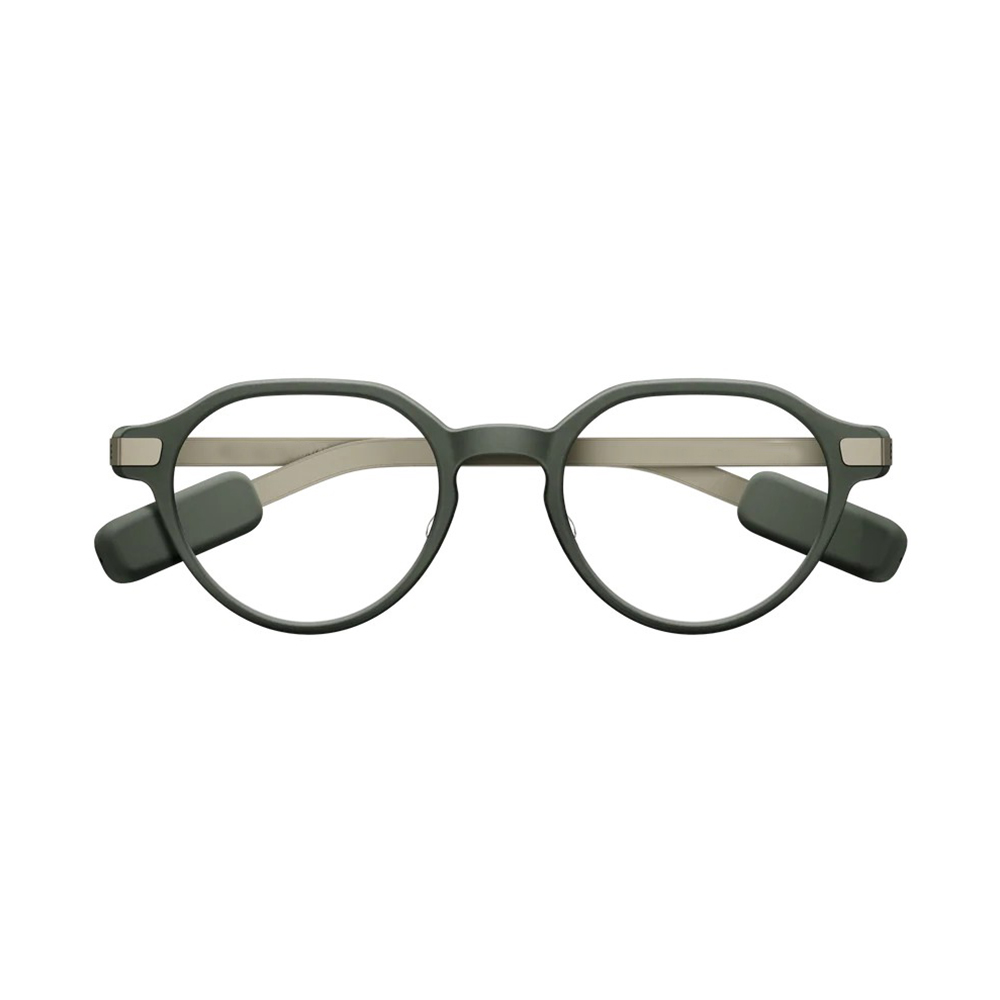
Core Hardware Evaluation: Augmented Reality Glasses Architecture
Optical solutions dictate real-world usability and dictate the physical design of the device. We typically see two main display architectures dominating the market. Selecting the right one depends entirely on your operational environment.
Micro-OLED paired with Birdbath optics offers high contrast and superb color accuracy. They excel in indoor environments requiring rich visual media. However, they remain bulkier. They often use tinted shields which restrict natural eye contact. Micro-LED paired with Optical Waveguide lenses provides a much thinner profile. They allow transparent lenses highly suitable for daily wear. Unfortunately, they traditionally suffer from lower color saturation. They also carry higher manufacturing costs.
Optical Architecture Comparison Chart | |||
Optical Technology | Primary Advantages | Main Drawbacks | Best Use Case |
|---|---|---|---|
Micro-OLED + Birdbath | High contrast, excellent color depth, lower cost | Thicker lenses, reduced transparency, heavier | Indoor media viewing, immersive training |
Micro-LED + Waveguide | Ultra-thin profile, high transparency, daylight readable | Lower color saturation, complex manufacturing | Outdoor field service, daily continuous wear |
Weight directly fights power capacity in any wearable tech design. Integrating batteries into slender temples introduces strict physical limits. You must choose between tethered processing versus standalone computing. Tethering offloads battery and CPU needs to a smartphone or compute puck. Standalone devices offer total freedom but sacrifice battery longevity.
Sensors drive accurate spatial mapping. A minimal viable sensor array includes an RGB camera, an IMU (Inertial Measurement Unit), and microphones. Adding LiDAR or depth sensors increases accuracy dramatically. However, doing so quickly violates the sub-100 gram weight constraint. You must assess the absolute minimum sensors required for your software to function.
Common Mistakes in Hardware Evaluation
Assuming high-resolution displays automatically equate to readable text outdoors.
Ignoring the physical heat generated by the onboard processor near the user's temple.
Choosing tethered models for highly active roles where cables pose a snag hazard.
Assessing Intelligence: The Engine Behind AR AI Smart Glasses
Multimodal AI integration defines a modern ar ai smart glasses headset. It processes real-time visual input for rapid object recognition. It simultaneously handles auditory input for live translation and intuitive voice commands. This dual processing creates a seamless user experience. You communicate with the device naturally, just as you would with a human assistant.
Connecting software features to tangible business outcomes clarifies their true value. We map specific capabilities to distinct operational advantages.
AI Features to Business Outcomes Mapping | ||
AI Feature | Technical Mechanism | Real-World Business Outcome |
|---|---|---|
Real-time Visual Processing | Computer vision scanning objects via RGB camera | Hands-free quality assurance and defect detection |
Noise-canceling Directional Audio | Beamforming microphones isolating vocal frequencies | Secure, clear communication in high-decibel plants |
Live Voice Translation | Cloud-based or NPU-driven NLP (Natural Language Processing) | Instant cross-border collaboration without interpreters |
Latency quickly ruins digital immersion and causes user frustration. You must evaluate the device's reliance on edge computing. Some systems rely entirely on 5G or Wi-Fi 6E connections to process AI commands. Others use an onboard neural processing unit (NPU). Zero-lag AI responses require robust local computation, especially for safety-critical tasks where network drops are unacceptable.
Sourcing and Scalability: Partnering with an AR Glasses Supplier
Transitioning from consumer novelty to enterprise reliability demands careful vendor vetting. When evaluating an AR glasses supplier, check their historical supply chain stability. Ask for documented return merchandise authorization (RMA) rates. High RMA rates signal underlying manufacturing flaws. You need a partner capable of scaling production without dropping quality control standards.
Enterprise integration relies heavily on mobile device management (MDM) compatibility. You need the ability to lock down devices securely. IT departments must provision these devices just like company smartphones. Pushing over-the-air (OTA) updates ensures long-term firmware stability and patches critical security vulnerabilities.
Furthermore, evaluate the availability of open SDKs (Software Development Kits). An SDK allows you to integrate proprietary software seamlessly via customized APIs. If a vendor locks you into a closed ecosystem, you lose agility. You must guarantee the hardware plays nicely with your existing database architecture and custom workflow applications.
Best Practices for Supplier Vetting
Request a detailed roadmap for future firmware updates before signing contracts.
Verify the hardware holds necessary regional safety certifications (CE, FCC).
Test MDM enrollment protocols during the initial hardware evaluation phase.
Implementation Realities, Risks, and Compliance
Data security forms the backbone of any enterprise wearable strategy. Navigating compliance frameworks like GDPR, HIPAA, or SOC2 requires complete transparency. A wearable tech device constantly records ambient audio and video. This creates massive legal liabilities. Hardware toggles or visible LED recording indicators become mandatory safeguards. Bystanders must know when a camera is active.
User adoption faces distinct physiological roadblocks. Cognitive load increases heavily with poor UI design and screen clutter. Physical ergonomics, such as nose bridge pressure, cause rapid user fatigue. Visual fatigue stems from the vergence-accommodation conflict. This occurs when your eyes focus on a digital screen close up, but converge on an object far away. We must address these issues actively through better software UI design and physical hardware adjustments.
Battery degradation introduces practical workflow limits. Expecting continuous-use battery life from ultra-lightweight frames often leads to operational disappointment. Thermal throttling kicks in during heavy AI processing to protect the hardware. Understand the stark difference between active processing limits and mere standby time. Frame temperatures over 40°C will quickly force users to remove the glasses.
Common Mistakes in Deployment
Deploying devices in high-security areas without disabling cloud-sync features.
Ignoring the weight distribution over the ears, causing pinch-point headaches.
Failing to provide prescription lens inserts for visually impaired employees.
Shortlisting Logic & Next Step Actions
First, define your exact use case priority. Segregate your hardware evaluation by your core business need. Textual data visualization demands high-resolution displays above all else. Remote assistance requires superior camera sensors and noise-canceling audio. Real-time AI translation relies heavily on low-latency processing architectures.
Next, structure a highly controlled pilot program before committing to fleet-wide rollouts. Pilot programs reveal hardware limitations that spec sheets hide. Follow a structured approach to validate your investment.
Deploy 5 to 10 units in a strictly controlled, single-department environment.
Define clear baseline KPIs before the deployment begins.
Measure actual user performance against speed metrics and error reduction rates.
Conduct weekly interviews assessing physical fatigue and ergonomic complaints.
Evaluate the device's network stability during peak operational hours.
Your actionable next step is simple. Request an evaluation kit today. Ask for a detailed technical spec sheet from your shortlisted vendors. Cross-reference their optical claims against your environmental needs. A true augmented reality glasses pilot will highlight whether the device serves as a workflow accelerator or a digital distraction.
Conclusion
The viability of ultra-lightweight AR AI glasses relies entirely on balancing competing hardware limits. You must weigh optical clarity against AI processing speed and ergonomic design. Heavy computing generates heat, which directly conflicts with lightweight, comfortable frames. Success requires understanding these physical boundaries.
Never purchase based solely on spec-sheet numbers. Prioritize physical comfort, data privacy compliance, and specific software ecosystem compatibility. A device that looks incredible on paper fails instantly if it causes neck strain or violates corporate security policies.
Take proactive action today to validate these technologies. Contact an enterprise deployment specialist to schedule a hands-on hardware demo. Test the device actively within your actual working environment to ensure it meets your operational standards.
FAQ
Q: What makes AR AI smart glasses different from traditional VR headsets?
A: They focus heavily on passthrough transparency and exist in a sub-100g weight class. They use AI-driven contextual overlays rather than creating total digital immersion. This allows you to maintain full spatial awareness while interacting with real-world objects seamlessly.
Q: Can ultra-lightweight augmented reality glasses support custom enterprise apps?
A: Yes, they generally run on Android-based operating systems. You should verify SDK availability with the manufacturer. Open SDKs ensure smooth custom workflow integrations and allow your internal IT teams to build proprietary overlay applications.
Q: How do suppliers handle prescription lenses for smart eyewear?
A: Most modern designs utilize magnetic optical inserts that sit behind the primary display. Some premium models offer custom waveguide etching. Others include built-in diopter adjustability features, allowing users to dial in their prescription dynamically without needing extra glass.
Q: What is the realistic battery life for continuous AI processing?
A: Transparent, evidence-based estimates show roughly 2 to 4 hours of continuous active use. Processing live video feeds drains batteries rapidly. You often need hot-swappable battery accessories or tethered power solutions to survive full eight-hour shifts.


