


AI Camera Smart Glasses: Wireless Voice Translation And Live Streaming
Views: 0 Author: Site Editor Publish Time: 2026-05-20 Origin: Site


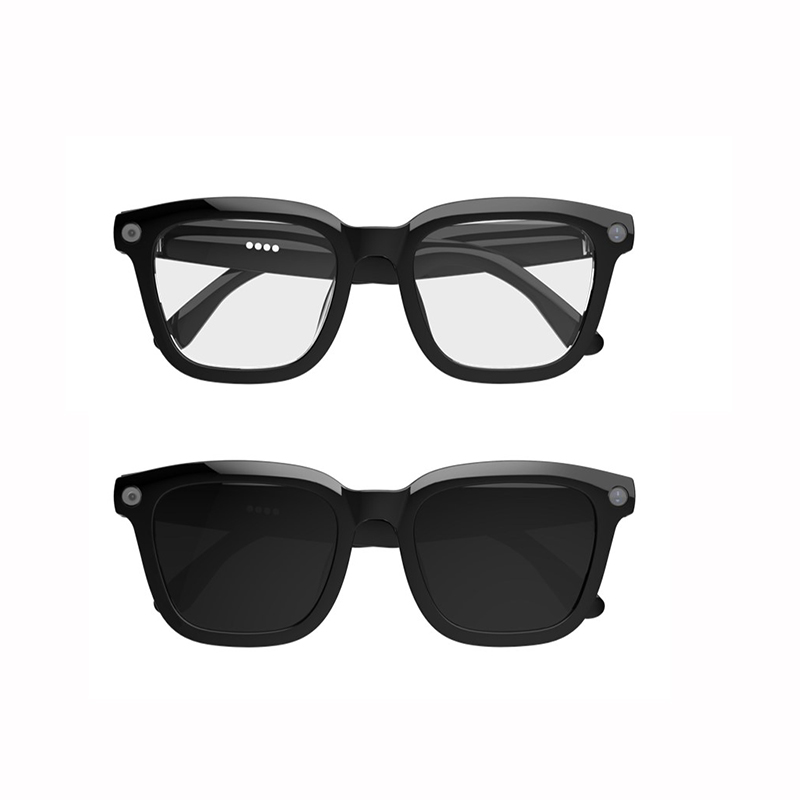
The convergence of point-of-view (POV) optics and real-time artificial intelligence has shifted wearables from novelty gadgets to legitimate productivity and creation tools. We no longer simply record the world around us. We process it instantly. Buyers evaluating AI camera glasses face a fragmented market today. Marketing claims frequently outpace actual hardware capabilities. You see this heavily regarding real-time translation latency. You also encounter it regarding live-streaming battery life. Buyers might purchase a device expecting flawless magic. They often find thermal throttling shutting down their broadcasts instead. To select a viable AI wearable, buyers must evaluate core processing capabilities. You must check thermal management under sustained load. Ecosystem compatibility matters significantly more than basic spec-sheet promises. We will guide you through matching real-world physics to your actual daily needs.
Key Takeaways
Translation Reality: Reliable voice translation requires evaluating latency (under 1 second is ideal) and offline processing capabilities, not just the total number of supported languages.
Streaming Constraints: POV live streaming demands robust thermal management and battery efficiency; most current models require tethering or external battery solutions for streams exceeding 30–45 minutes.
Compliance & Privacy: Enterprise and public use requires strict adherence to privacy frameworks, necessitating visible recording indicators and secure data transmission protocols.
Primary Value Driver: The highest ROI comes from hands-free, frictionless workflows—whether for field service troubleshooting, seamless cross-cultural communication, or immersive content creation.
The Evolution of the AI Wearable: Beyond Basic Camera Glasses
Wearable technology has undergone a massive transformation in recent years. We must clearly distinguish legacy camera glasses from modern alternatives. Older models focused entirely on simple local recording. They captured video files. They saved those files directly to an internal memory card. They lacked environmental awareness completely. You had to plug them into a computer later to retrieve the footage. Today, modern AI smart glasses deliver cloud-connected, real-time processing capabilities. They do not just passively see the world. They actively understand it.
This technological shift represents the wireless AR convergence. Modern wireless AR glasses integrate multimodal artificial intelligence seamlessly. They process audio, visual, and spatial inputs simultaneously. The device interprets real-world inputs instantaneously to assist the wearer. You look at a foreign street sign, and the device translates the text. You speak to a foreign client, and the device translates your voice. It blends the digital layer seamlessly over your physical reality.
To achieve this impressive dual-functionality, devices require strict hardware baselines. Real-time translation and continuous live video streaming demand immense processing power. You cannot rely on basic components for these tasks. We look for three core hardware requirements when evaluating new models.
Core Hardware Requirements for Modern Wearables | ||
Hardware Component | Minimum Baseline Requirement | Why It Matters Practically |
|---|---|---|
Microphone Array | Dual or high-fidelity mic arrays | Crucial for active noise cancellation. It isolates the user's voice accurately. |
Processing Unit | Dedicated AI co-processors | Handles complex machine learning tasks locally. It prevents major translation delays. |
Connectivity Module | Wi-Fi 6E or Bluetooth 5.3+ | Ensures low-latency data transfer. It guarantees smooth live broadcasting streams. |
Dual or high-fidelity microphone arrays perform a critical job. They isolate user speech effectively. They strip away background noise before processing the audio signal. Dedicated AI co-processors manage the heavy computational lifting. If the frames lack an internal AI chip, they require highly optimized smartphone tethering protocols instead. Finally, low-latency wireless connectivity remains absolutely non-negotiable. Using Wi-Fi 6E or Bluetooth 5.3 prevents awkward audio desynchronization during live translations.
Evaluating Voice Translation Glasses: Accuracy vs. Latency
Real-time language translation sounds incredible during marketing presentations. However, actual execution relies heavily on processing speed. We refer to this challenge as the latency bottleneck. Buyers must understand the clear difference between simultaneous interpretation and consecutive translation. Consecutive translation forces you to wait. A speaker finishes a full sentence, and then the software begins translating. Simultaneous interpretation happens almost instantly as they speak. Natural human conversation demands strict latency thresholds. Acceptable latency hovers under one single second. Anything longer disrupts conversational flow severely. Long pauses make users feel awkward and impatient.
High-quality voice translation glasses must handle acoustic isolation perfectly. Imagine standing on a busy downtown street. Think about walking through a crowded trade show floor. The microphones must identify your specific voice alone. Directional audio capture targets the primary speaker accurately. Advanced AI noise suppression algorithms filter out traffic sounds. They remove ambient crowd chatter effectively. Without this acoustic isolation, the AI attempts to translate the background noise. This results in chaotic, useless text outputs.
You must also carefully consider offline versus cloud-based translation processing. Cloud-based systems rely entirely on active internet connections. They send recorded audio data via API calls to powerful remote servers. This method offers incredibly high accuracy. It usually supports dozens of languages perfectly. However, it fails completely in internet dead zones. A dropped cellular signal breaks the translation feature immediately. Localized offline translation packs solve this internet dependency problem. You download specific language models directly to the internal storage. They offer superior reliability in remote areas or subways. The main trade-off involves a smaller overall vocabulary. They might also deliver slightly lower grammatical accuracy.
Finally, you need to evaluate the user interface delivery methods. How exactly do the frames give you the translated information? Manufacturers currently utilize three primary delivery methods.
Open-ear audio speakers: Small directional speakers rest near your ear canal. They project translated audio directly downward. They keep you fully aware of approaching vehicles or hazards.
Bone conduction technology: Small pads rest against your cheekbones. Vibrations send audio directly to your inner ear. This works exceptionally well in extremely loud industrial environments.
Visual AR text overlays: The optical lenses project translated subtitles directly into your field of view. This greatly benefits users needing visual confirmation of complex technical terms.
Live Streaming with Smart Glasses with Camera: Technical Realities
Streaming live video directly from your face presents unique engineering hurdles. Promotional materials frequently boast about 4K video capabilities. They rarely discuss resolution versus bitrate trade-offs openly. A 4K camera sensor does capture beautiful local video files. However, pushing that dense data wirelessly requires massive bandwidth. During an actual wireless live stream, high resolutions degrade very quickly. Network bandwidth limitations force the software to compress the video heavily. A stable 1080p stream often looks vastly superior. A heavily compressed, stuttering 4K stream frustrates viewers quickly.
If you plan to evaluate smart glasses with camera functionality, test platform integration early. The hardware must communicate with your chosen software natively. Assess network compatibility carefully. Look for deep support for major streaming protocols like RTMP. Verify native application integrations for popular platforms. You want seamless connections to YouTube, TikTok, Microsoft Teams, and Zoom. If the device requires clunky third-party bridging applications, streaming becomes highly frustrating. Every extra software layer introduces new points of failure.
Image stabilization ranks as another strictly mandatory feature. Human head movements are erratic and constant. We nod, turn, and tilt our heads naturally. Without proper stabilization, POV broadcasts cause severe viewer motion sickness. Electronic Image Stabilization (EIS) smooths out these micro-jitters computationally. It crops the sensor image slightly. It uses this buffer space to absorb physical shocks digitally. Your viewers enjoy a smooth, professional-looking broadcast.
Field of View (FOV) requires careful consideration as well. The camera's FOV should roughly match natural human eye perspective. We typically see comfortably between 110 and 120 degrees horizontally. An excessively wide FOV creates unnatural fisheye distortion around the edges. A very narrow 90-degree FOV acts like a zoomed telephoto lens. It cuts out crucial context from the scene. Matching the human perspective helps viewers feel truly immersed in your actual environment.
Implementation Risks: Thermal, Battery, and Privacy Limitations
Pushing tiny wearable computers to their absolute limits introduces strict physical risks. Thermal throttling represents the largest operational hurdle for hardware manufacturers today. Processing complex AI translation tasks generates significant heat internally. Streaming high-definition video wirelessly simultaneously generates even more thermal load. Compact wearable form factors lack active cooling fans. Heat dissipates very poorly through plastic or metal frames resting against human skin. The physical limitations of heat dissipation remain strict.
When the internal components get too hot, the chips purposely slow down. They limit clock speeds to protect themselves from melting. Acknowledge this thermal reality early. Overheating remains the absolute number one cause of unexpected stream failure. A downgraded processor simply struggles to encode video properly.
Battery degradation runs parallel to these thermal issues. Continuous wireless streaming and active AI processing drain small batteries rapidly. Marketing materials might claim entire days of standby time. They rarely mention active streaming durations. Realistic expectations for continuous heavy use hover around thirty to sixty minutes. Professionals need extended power solutions for longer sessions. Charging cases provide quick juice between short broadcasts. Magnetic tethered power banks offer continuous power during extended tasks. You simply route a thin charging cable down to your jacket pocket.
Privacy and compliance constraints heavily shape how you can use these devices legally. Wearable cameras operate fluidly in public spaces and corporate environments. Legal frameworks globally require operational transparency. Hardwired LED recording indicators alert bystanders during active recording sessions. A physical LED tied directly to the camera power circuit ensures strict compliance. If the camera receives power, the light stays on automatically. Software cannot disable it secretly.
Enterprise users face incredibly strict data security constraints. You must know exactly where the system processes your AI translation data. Does it stay completely on the local device? Does it travel to an overseas commercial server? Secure corporate environments require localized, offline processing. End-to-end encryption remains mandatory for all cloud interactions. You cannot transmit sensitive corporate trade secrets over unsecured, public translation APIs safely.
Shortlisting Framework: Matching Hardware to Success Criteria
No single wearable device excels at every possible use case yet. You must define your operational success criteria clearly before making a purchase. We separate potential buyers into two distinct user profiles.
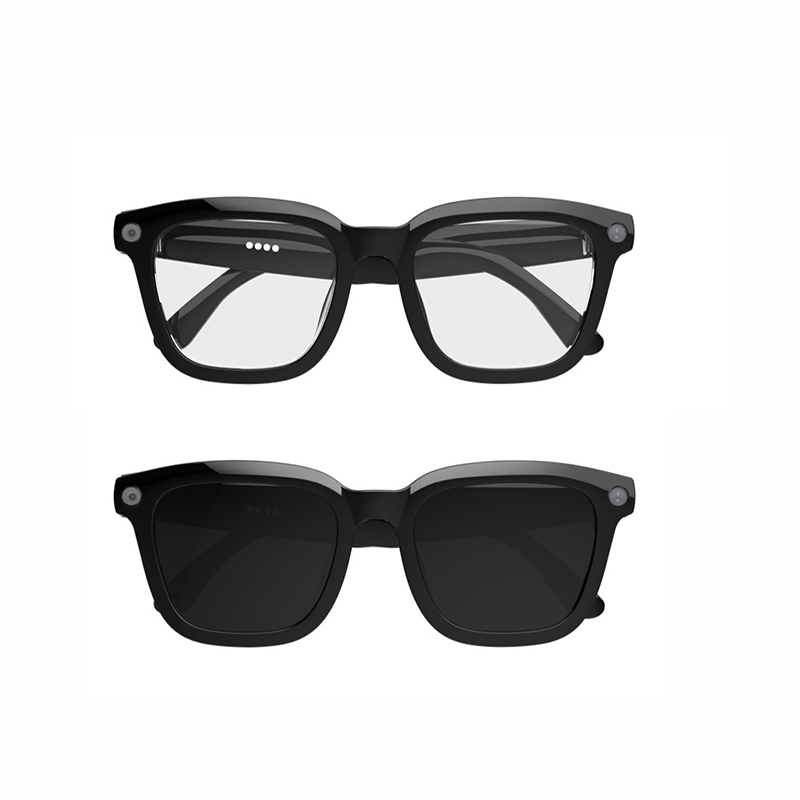
For the content creator or frequent traveler, aesthetics and ease of use dominate the decision matrix. You should prioritize a highly lightweight design. Bulky headsets ruin the everyday travel experience. Seamless social media app integration saves you hours of frustrating video editing. High-fidelity audio capture ensures your travel vlogs sound highly professional. A stylish frame matters just as much as the internal neural processor here. You want a device you feel comfortable wearing casually in a coffee shop.
For enterprise users or field service operations, reliability and software integration take total precedence. You must prioritize physical ruggedness above all else. Dust and water resistance ratings keep the device alive outdoors. Open API access allows your internal IT team to build custom software integrations. Robust offline functionality guarantees solid performance in concrete basements or remote construction sites. Battery hot-swapping lets shift workers finish a demanding twelve-hour maintenance routing uninterrupted.
Use Case Priority Comparison Chart | ||
Feature Category | Creator / Traveler Priorities | Enterprise / Industrial Priorities |
|---|---|---|
Physical Form Factor | Lightweight, stylish frames, sunglasses options | Ruggedized, safety-glass rated, high durability |
Power Management | Pocket charging case for intermittent use | Hot-swappable external tethers for continuous shift use |
Software Ecosystem | Native social media apps (TikTok, Instagram) | Custom API access, MDM (Mobile Device Management) support |
Translation Processing | Cloud APIs (Maximum language support) | Local offline processing (Maximum data security) |
Always utilize a strict verification checklist before finalizing any bulk hardware purchase. Never rely solely on heavily edited promotional videos. Ask the hardware vendor for raw, unedited live streaming samples. Test the translation accuracy yourself in a simulated noisy environment. Turn on a vacuum cleaner or play loud crowd music during your evaluation test. Finally, verify the exact return policy carefully. Pay special attention to warranty clauses regarding accelerated battery wear.
Conclusion
AI smart glasses are currently mature enough for targeted, decision-stage adoption. Buyers simply need to align their expectations cleanly with current hardware physics. The technology delivers immense practical value when deployed correctly in the right scenarios. It bridges complex language barriers instantly for travelers. It provides immersive, hands-free broadcasting capabilities for creators and field technicians. However, you cannot ignore fundamental battery chemistry and thermal constraints. Small frames can only do so much at once.
Your immediate next step involves prioritizing your primary use case strictly. Decide if you truly need an anchor feature focused on voice translation or live streaming. Do not demand perfection in both simultaneously from a lightweight frame. Request live vendor demonstrations based entirely on this chosen anchor feature. Compare your final shortlisted models using real-world testing environments. Avoid making decisions based on sterile showroom demonstrations. Embrace the current physical limitations, leverage the immense AI strengths, and integrate these modern wearables intelligently into your daily workflow.
FAQ
Q: Can AI smart glasses translate accurately without a Wi-Fi or cellular connection?
A: Yes, but it depends largely on the specific device. Some advanced glasses utilize localized language models downloaded directly to onboard storage. These offline packs process translations internally without any internet access. They offer incredible reliability in dead zones like subways. However, offline models usually support fewer languages and possess a smaller technical vocabulary compared to robust cloud-dependent processing.
Q: How long can you realistically live stream from smart glasses with a camera?
A: You should maintain skeptical, evidence-based expectations. Most current lightweight models sustain continuous live streaming for roughly 30 to 60 minutes. Thermal throttling and exceptionally small battery capacities limit extended use. Broadcasts exceeding one continuous hour typically require external magnetic power tethers or specialized ruggedized headsets equipped with much larger battery packs.
Q: Do voice translation glasses work for multiple speakers at once?
A: Current processing power heavily favors simple one-on-one conversations. The AI struggles significantly with complex multi-party parsing. Overlapping voices confuse the directional microphones and predictive translation algorithms. While the software can process consecutive speakers well, natural group discussions with simultaneous talking remain a major technical limitation for modern wearable translation technology.
Q: Are wireless AR glasses secure enough for corporate data?
A: Enterprise readiness varies significantly by manufacturer. Secure commercial models offer SOC2 compliance and end-to-end encryption for all external data transfers. To maximize corporate data security, enterprise organizations should strictly prioritize devices offering localized offline data processing. This architectural choice prevents sensitive corporate conversations from ever reaching external public cloud servers.


