


Why Is AI Navigation The Game-Changer for Smart Glasses?
Views: 0 Author: Site Editor Publish Time: 2025-07-05 Origin: Site


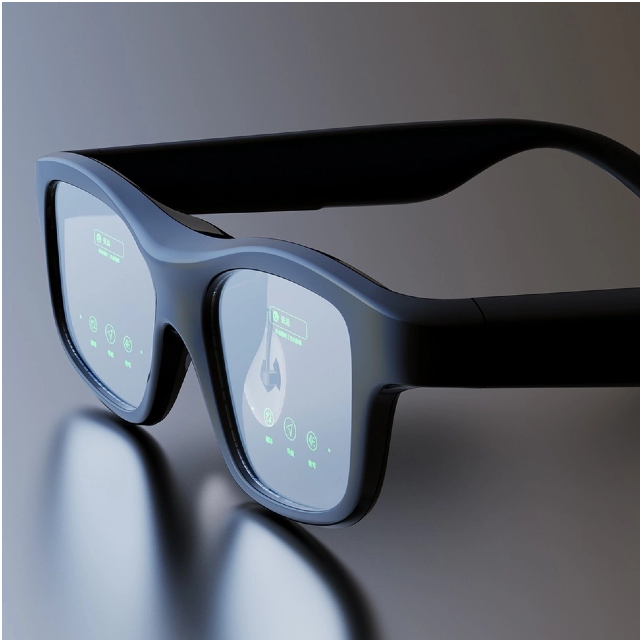
Modern navigation tools have changed the way we move through the world, but they still rely heavily on screens, taps, and interruptions. AI glasses, equipped with AI navigation, are transforming this experience—placing turn-by-turn directions, landmark cues, and spatial awareness directly into your line of sight.
With Sotech’s smart AI glasses, users enjoy a hands-free, real-time navigation experience that feels like second nature. Whether you're cycling through city streets, walking in a crowded train station, or exploring a foreign museum, AI navigation puts seamless guidance exactly where you need it—right before your eyes.
What Does “AI Navigation” Mean for Glasses?
AI navigation in the context of glasses refers to a system that blends real-world visual input with digital navigational data, then presents that information to the user in a contextual, heads-up display. Instead of pulling out your phone or relying on audio cues alone, your glasses become a dynamic, visually-integrated guide.
Here's what this means practically:
Visual Overlay: Arrows, labels, and route suggestions appear on the lenses, aligning with your actual surroundings.
Context Awareness: The AI adapts navigation based on your speed, direction, and environment—no need for manual adjustment.
Real-Time Adjustments: If you miss a turn or enter a new area, the system recalibrates instantly, keeping you oriented and informed.
Sotech’s glasses act not just as a navigator, but as an intelligent co-pilot—an assistant that sees what you see and reacts accordingly.
How Accurate Is AI Navigation Today?
One of the key innovations behind AI navigation is its shift from basic GPS to more advanced vision-based localization technologies.
1. Visual Positioning System (VPS)
VPS uses your surroundings—buildings, signs, and other landmarks—to determine your location with far greater precision than traditional GPS. It’s particularly effective in dense urban environments, where GPS often struggles due to signal reflection or blockage.
2. Simultaneous Localization and Mapping (SLAM)
SLAM allows AI glasses to build a map of the environment while simultaneously tracking the user’s location within it. This is critical for:
Indoor Navigation: Where GPS fails, such as in airports, malls, or office buildings.
Complex Environments: Multi-level spaces, temporary structures, or crowded venues.
Sotech’s glasses integrate both VPS and SLAM for robust navigation performance, delivering sub-meter accuracy in a wide range of scenarios.
By processing visual cues using embedded AI chips, our navigation system remains fast, stable, and independent of network conditions—ensuring a reliable experience even in low-signal areas.
Which Scenarios Benefit from AI Navigation?
AI navigation is more than just a convenience—it unlocks entirely new experiences across a variety of personal and professional contexts.
1. Tourism & Sightseeing
Walk through historical districts with on-screen descriptions of landmarks.
Discover restaurants, shops, or cultural sites with smart recommendations and guided routes.
Translate signs and menus on the spot for frictionless exploration.
2. Indoor Guidance
Navigate complex spaces like convention centers, airports, or hospitals with step-by-step directions.
Receive prompts for nearby restrooms, exits, or security checkpoints without consulting a map.
Adapt to dynamic environments, such as construction zones or crowds.
3. Cycling & Outdoor Activities
See real-time routes and traffic cues while keeping your hands on the handlebars.
Get alerts for elevation changes, weather conditions, or detours—all without looking down.
Share live location with friends or emergency contacts for safety.
4. Assistance for the Visually Impaired
Describe surroundings through audio narration powered by computer vision.
Guide users around obstacles, curbs, or crosswalks.
Recognize signage and relay messages via voice output.
These diverse scenarios demonstrate the broad applicability and transformative potential of AI navigation through smart eyewear.
Examples from Competitors
The concept of spatially aware navigation is gaining attention, with several companies investing in the space:
Niantic Spatial: Builds AR environments through mobile devices and now XR glasses, focusing on persistent world mapping for gaming and exploration.
Google’s Android XR & ARCore: Enables fixed-point memory and persistent AR markers to assist with spatial recall and indoor routing.
Meta Ray-Ban: Offers limited voice and location-based functionality but lacks detailed, map-oriented AR integration.
These platforms provide exciting glimpses of the future, but often rely heavily on smartphones, cloud connectivity, or are still in beta development stages. Many of them lack offline support or deliver low frame accuracy, which affects reliability in fast-moving or signal-blocked environments.
Sotech addresses these limitations with fully on-device visual navigation, ensuring real-time feedback, greater data security, and better energy efficiency.
How Does Sotech’s Product Stand Out?
While the concept of AI navigation is growing, Sotech’s implementation stands apart in several key areas:
1. Superior Accuracy
Through a hybrid of vision-based mapping, GPS integration, and inertial sensors, Sotech’s system maintains precise positioning even in GPS-dead zones like underground metros or dense cities.
2. Readable, Adaptive Maps
Our UI is optimized for glanceability. Route overlays adjust based on your head position, light conditions, and speed, ensuring clarity whether you're walking slowly or cycling quickly.
3. Offline Functionality
Unlike competitors that rely on cloud data, our on-device maps and SLAM models allow for full navigation even when disconnected from the internet. This is critical for travelers, outdoor workers, or users in rural regions.
4. Energy Efficiency
Thanks to custom-designed chips and optimized algorithms, our AI navigation engine consumes minimal battery power, enabling all-day use without overheating or shutdown.
5. Safety-First Design
Visual overlays are non-intrusive and positioned for peripheral reference, ensuring that they assist rather than distract. You stay aware of your surroundings while receiving just the right amount of digital guidance.
What’s the Future of Smart Navigation Glasses?
As AI technology evolves, so does the potential of navigation systems embedded in smart glasses. Here are some of the most promising developments on the horizon:
1. Contextual Route Planning
Imagine glasses that don’t just follow a map, but suggest routes based on your preferences, past behavior, and real-time conditions. For example, avoiding hills when biking or recommending scenic routes when sightseeing.
2. AI-Powered Decision Support (AiGet Concept)
Similar to the AiGet recommendation system discussed on The Verge, smart glasses could integrate contextual recommendations for places, services, or people nearby. This might include:
Alerting you to upcoming road closures.
Suggesting a shortcut through a building to avoid crowds.
Proposing quiet walking paths during peak hours.
3. Integrated Multimodal Input
Combining voice commands and gestures, users will soon interact with navigation naturally. Say “Where’s the pharmacy?” or point in a direction, and receive instant, clear guidance.
4. AR + AI Fusion
In the near future, Sotech is preparing to blend navigation with interactive augmented reality—where points of interest can be tapped virtually or explored with head gestures.
The vision is clear: AI navigation will not only guide you—it will anticipate, adapt, and enrich your journey.
Conclusion
AI navigation is no longer an experimental feature—it’s becoming the core utility of the next generation of AI glasses. With Sotech’s smart navigation system, users enjoy unparalleled freedom, accuracy, and usability in both indoor and outdoor environments.
By delivering low-latency visual guidance, offline capabilities, and personalized pathfinding, Sotech is setting a new standard in wearable intelligence. From tourists and commuters to professionals and accessibility users, our glasses offer a smarter way to move through the world.
Contact us today to discover how Sotech’s AI glasses with built-in navigation can transform your daily life—and lead you into the future, one step at a time.


