


Consumer vs Industrial AR Glasses: Key Differences Explained
Views: 0 Author: Site Editor Publish Time: 2026-04-30 Origin: Site


Introduction
Consumer AR glasses and industrial AR glasses may look similar from the outside. The real difference appears during long shifts, noisy environments, data workflows, and device management. This guide breaks down consumer vs industrial AR glasses by comparing use cases, design priorities, and deployment requirements with all-in-one smart AR glasses for industrial use as a product reference.
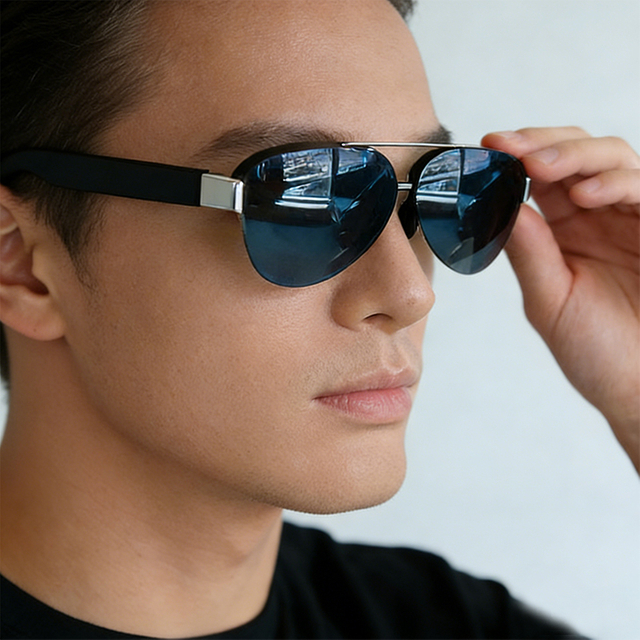
Consumer vs Industrial AR Glasses: The Main Difference
Practical Context
Consumer AR glasses are typically designed for media, navigation, social interaction, and lightweight personal use. Industrial AR glasses are designed for field work, inspections, maintenance, training, and collaboration. The difference is not only the shell design. It includes durability, software workflow, support model, safety, connectivity, and integration.
Performance Factors
Industrial buyers need repeatability. A device may be used by many people across multiple shifts. It may need to connect to enterprise systems, support remote expert sessions, record inspection data, and remain reliable in active environments.
Buyer Considerations
Sotech's consumer AR glasses is positioned for manufacturing, field inspections, and maintenance, showing how industrial AR glasses prioritize operational tasks.
Hardware Priorities in Consumer and Industrial Models
Practical Context
Consumer products often prioritize style, media comfort, lightweight frames, and daily convenience. Industrial products prioritize battery strategy, camera capability, sensors, voice control, ruggedness, and manageability.
Performance Factors
A consumer device may be judged by lifestyle appeal. An industrial device is judged by whether it reduces errors, improves reporting, supports training, and keeps workers connected while their hands remain available.
Buyer Considerations
Display brightness, field of view, prescription support, audio clarity, and heat control matter in both categories, but industrial environments usually place heavier demands on reliability.
Software, Support, and Deployment Differences
Practical Context
Industrial AR glasses require software layers for remote collaboration, work instructions, content management, device management, and sometimes AI recognition. Consumer glasses often rely on simpler apps or smartphone companion tools.
Performance Factors
Deployment also differs. Enterprise buyers need training, user acceptance planning, IT compatibility checks, and data security review. A successful rollout is not just a device purchase. It is a workflow project.
Buyer Considerations
The right choice depends on whether the buyer wants personal digital experience or operational productivity.
Buying Guide for Industrial Buyers
Start with the Application, Not Only the Product Name
A reliable purchase decision begins with the working environment. For materials, buyers should define processing temperature, binder chemistry, particle size requirements, storage conditions, and final performance targets. For AR devices, buyers should define work scenarios, connection environment, wear time, data workflow, and software requirements. A product name is useful, but it is not enough to qualify a technical solution.
Review Documentation and Validation Samples
Documentation helps teams compare suppliers on more than marketing language. Useful documents include technical data sheets, safety data sheets, certificates, product specifications, inspection records, and application notes. Samples are equally important because real validation often reveals processing details that are not visible in a product description.
Match Supplier Support to Project Risk
The higher the project risk, the more important supplier support becomes. A standard reorder may only need stable logistics and consistent batches. A new formulation, new device deployment, or export project usually needs technical discussion, sample follow up, and specification alignment. This is where a focused manufacturer such as Sotech can add value by helping buyers connect product choices to real use cases.
For related evaluation, buyers can also review AI camera smart glasses when comparing adjacent product options.
Validation Workflow Before Deployment
Pilot the Device in a Real Task
A polished demonstration is useful, but a real pilot is more valuable. Choose one task that happens often, has measurable pain points, and involves users who will speak honestly about comfort and workflow. For example, a maintenance team can test remote assistance on a repeated inspection route, while a warehouse team can test visual guidance during picking and confirmation.
Measure Operational Signals
The pilot should measure more than user interest. Track task completion time, error rates, support response time, training time, documentation quality, and worker acceptance. These signals reveal whether AR is solving a business problem or simply adding another tool.
Plan for Scale
If the pilot succeeds, the next step is device management, user training, content management, and support planning. Enterprise AR becomes more powerful when instructions, inspection forms, video support, and device policies are managed consistently across teams. A scalable plan prevents early enthusiasm from turning into operational confusion.
Common Mistakes to Avoid
Selecting Hardware Before Defining the Workflow
One common mistake is choosing AR hardware before defining the task. consumer vs industrial AR glasses creates value only when the device supports a real process. If a buyer does not define who uses the device, what information is displayed, and how results are captured, the project may struggle even with capable hardware.
Ignoring User Comfort
A wearable device is different from a handheld tool. If the glasses are uncomfortable, poorly balanced, or difficult to control, workers may resist using them. Comfort, weight, battery placement, prescription support, and audio quality should be tested early.
Treating Software as an Afterthought
AR projects often depend on remote support, data capture, task guidance, and device management. These requirements are software driven. Hardware and software should be evaluated together from the beginning, especially for enterprise environments.
Anonymous Competitor Comparison
This comparison uses anonymous references for comparable AR device or enterprise wearable solutions.
Specification | Sotech solution Reference | Competitor A | Competitor B | Industry Average |
|---|---|---|---|---|
Primary use | Enterprise and professional deployment | Consumer entertainment | Single task field use | Mixed positioning |
Workflow fit | Remote support, inspection, training, data capture | Media and lifestyle use | Basic visual assistance | Application dependent |
Hardware design | Camera, display, audio, sensors, connectivity | Display focused | Camera focused | Varies by model |
Software support | Platform and enterprise integration path | App only support | Limited software layer | Moderate support |
Deployment value | Designed for repeatable operational tasks | Personal use | Small team use | Depends on environment |
Technical Specification Checklist for Consumer vs Industrial AR Glasses
Evaluation Item | Why It Matters | Recommended Review Point |
|---|---|---|
Display system | Determines readability, visual comfort, and information density | Review resolution, brightness, FOV, and optical design |
Camera and sensors | Enable inspection, recognition, recording, and remote diagnostics | Confirm camera quality, sensor set, and use case fit |
Audio performance | Supports remote collaboration in active work environments | Evaluate microphone pickup and speaker clarity |
Connectivity | Affects video streaming, data access, and enterprise management | Check Wi-Fi, Bluetooth, network mode, and integration route |
Ergonomics | Determines wear comfort during long tasks | Review weight, balance, nose support, and prescription options |
Software compatibility | Converts hardware into a working business tool | Confirm APIs, management tools, workflow platform support |
Market Trends and Application Outlook
Wearable computing is becoming more practical as display modules, cameras, batteries, processors, and software platforms improve. Enterprise buyers are moving from experiments to focused deployments where AR must support measurable operational outcomes. The strongest demand appears in areas where workers need information while their hands remain available.
Another trend is the connection between device hardware and workflow platforms. A smart headset without software may only be a display. A connected AR system can support task guidance, remote collaboration, data capture, and training records. This is why buyers increasingly evaluate hardware, software, integration, and support as one system.
Regional demand also varies. Some markets focus on industrial inspection and field service. Others focus on consumer smart glasses, healthcare support, education, or logistics. Export ready suppliers need flexible product options, clear specifications, and support for application specific customization.
Conclusion
Consumer vs Industrial AR Glasses: Key Differences Explained is more than a general product topic. It is a practical decision area where technical details, application goals, supplier capability, and validation discipline all matter. Buyers who define their operating conditions clearly can compare products more accurately and avoid mismatched specifications.
For industrial buyers, the safest approach is to combine product data with sample testing and supplier communication. Whether the project involves functional powder materials or wearable AR systems, the best outcome comes from choosing a solution that fits the application, not just the category name.
FAQ
Q: What is the difference between consumer and industrial AR glasses?
A: Consumer AR glasses focus on personal experience, while industrial AR glasses focus on work tasks, reliability, and enterprise workflows.
Q: Can consumer AR glasses be used in factories?
A: They may work for simple demonstrations, but industrial tasks usually require stronger hardware, support, and software integration.
Q: Why do industrial AR glasses need cameras?
A: Cameras support inspection recording, remote expert guidance, AI recognition, and documentation.
Q: Do industrial AR glasses need enterprise software?
A: Yes, software is often needed for collaboration, work instructions, security, and device management.
Q: Which AR glasses are better for training?
A: Industrial AR glasses are usually better for structured training where workers need hands-on visual guidance.
Q: What should global buyers compare?
A: Buyers should compare use case fit, battery design, display quality, camera, software, support, and deployment planning.


