


Consumer AR Glasses With Weekly Charging: Leion HEY 2 Review
Views: 0 Author: Site Editor Publish Time: 2026-05-18 Origin: Site


The biggest barrier to adopting consumer wearable tech isn't visual fidelity. Battery anxiety and social awkwardness constantly hold buyers back. You probably feel tired of wearable gadgets dying mid-conversation or looking like bulky sci-fi props. Unveiled at CES 2026, the Leion HEY 2 completely pivots away from bloated, camera-heavy hardware designs. Instead, it focuses exclusively on natural communication and impressive daily longevity. By combining an ultra-lightweight frame with a dedicated 96-hour charging case, this device shifts the paradigm. It moves beyond acting as a mere novelty gadget. Readers will learn how it serves as a highly reliable, daily-use tool for cross-border business, travel, and everyday accessibility. You will discover exactly how its purpose-built design easily outlasts traditional alternatives. We will explore how it maintains your privacy while enhancing your face-to-face interactions.
Key Takeaways
Battery Reality: Delivers 6–8 hours of continuous use, extended to a full 96 hours via the included charging case—making weekly charging a reality for moderate users.
Purpose-Built Design: Weighs only 49g; strips away cameras and speakers to prioritize privacy, comfort, and direct eye contact.
Core Performance: Achieves sub-500ms latency for real-time translation across 100+ languages using a 4-mic array and directional audio pickup.
Display Transparency: Utilizes waveguide optics and a Micro-LED engine with high-contrast green text, minimizing visual obstruction while maintaining a discreet profile.
Trust Factor: While highly effective for translation and transcription, users should expect minor front-facing light leakage in dark environments and note the lack of immersive 3D capabilities.
The Power Problem in Consumer AR Glasses (And How Leion Solves It)
High-draw processors and bright full-color screens usually drain standard consumer AR glasses in just two or three hours. This fundamental industry bottleneck makes daily wear nearly impossible for serious users. You cannot confidently enter a long corporate conference knowing your translation device might die before noon. Constant battery anxiety ruins the user experience. It quickly turns a helpful communication tool into a stressful liability.
Leion introduces a robust "weekly charging" architecture to solve this exact issue. They employ a highly effective dual-battery strategy. First, the glasses themselves deliver six to eight hours of active, continuous display time. This duration easily covers almost an entire working day of direct use. Second, you get a sleek, pocketable charging case. This case extends the total system runtime to an impressive 96 hours before needing a wall outlet.
Business travelers benefit massively from this reliable setup. Imagine leaving your hotel on a Monday morning. You use your glasses for two hours of daily translation meetings. You simply place them back into the protective case each afternoon. The case automatically tops up the internal battery while you travel. You will not need to plug the main case into a wall outlet until the weekend. This represents a massive leap forward for AR glasses with long battery capabilities.
How do the engineers manage this exceptional efficiency? The hardware relies on a highly advanced, low-power Micro-LED system. They paired this energy-efficient lighting with a simplified, text-first AR setup. Standard headsets project full-color, immersive 3D graphics. Those intensive visual tasks generate enormous heat and drain batteries rapidly. Skin safety also becomes a major concern when heavy processors run hot near your face. By projecting only essential green text, Leion drastically reduces overall thermal output. This deliberate hardware choice keeps the frames cool against your skin while dramatically reducing total power consumption.
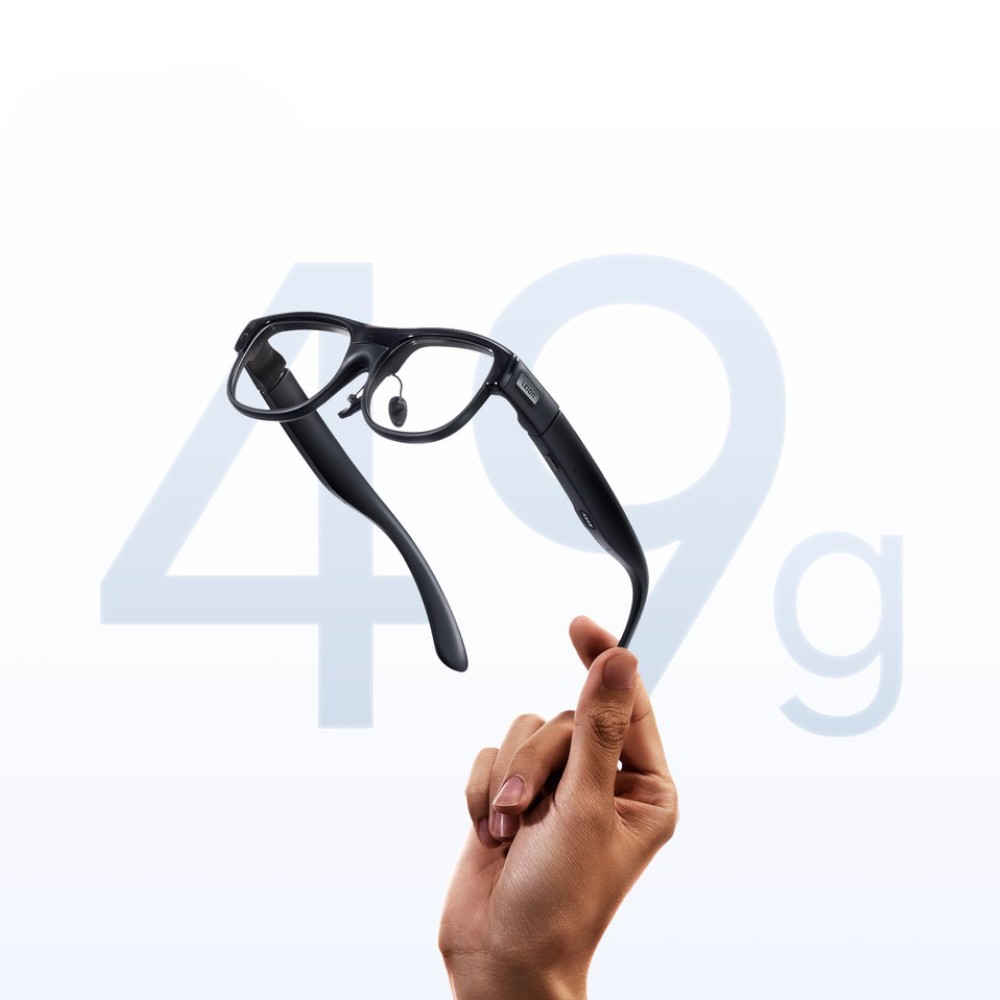
Display & Design: Evaluating the "Wearable Display Device" Form Factor
Let us thoroughly analyze the visual hardware specifications. The system utilizes top-tier waveguide optics combined with a crisp Micro-LED engine. Waveguide technology remains expensive to manufacture, but it is entirely necessary for keeping the lenses thin and looking natural. Many older augmented reality models suffer from distracting color banding and harsh optical glares. However, this modern wearable display device claims a 98% reduction in the notorious "rainbow effect." Your textual overlays remain sharp and perfectly clear across various lighting conditions.
Legibility remains excellent due to the specific choice of high-contrast green UI text. The human eye easily detects glowing green against complex physical backgrounds. Furthermore, the HUD (Head-Up Display) elements are entirely adjustable. You can easily modify the text size via the companion app. You can also move the active text block to different screen quadrants. This crucial feature ensures the digital words never block your natural eye contact during face-to-face conversations.
Comfort matters deeply for any item intended for all-day wear. The entire unit weighs an astonishingly light 49g. Engineers achieved this remarkable weight using a specialized magnesium-lithium alloy frame. They added premium titanium nose pads to prevent skin irritation during extended wear. They also integrated stepless spring hinges to accommodate different head sizes gently. These premium materials make the unit look and feel exactly like standard fashion eyewear.
We must honestly address the "discreet screen" reality check. The overall design is genuinely inconspicuous for daily use. However, a slight light leakage remains physically visible to others if you stand in dimly lit rooms. Onlookers might notice a very faint green glow reflecting off the lenses. It is highly discreet, but you should recognize it is not entirely invisible in the dark.
Core Utility: Real-Time Translation on a Smart Display Glasses Platform
Existing translation technologies often fail miserably in real-world scenarios. Handheld translators create awkward, round-robin conversations. Phone applications force you to look down constantly. Translating earbuds isolate your audio completely. They strip away crucial body language cues and situational awareness. A true smart display glasses platform solves these pressing issues instantly. It keeps your head up and completely preserves vital eye contact.
Speed and accuracy are absolute necessities for natural dialogue. Standard human conversational pauses hover around 200 milliseconds. The system achieves an impressive sub-500ms processing latency. This near-instant delivery makes conversations feel highly organic. It smoothly supports over 100 different languages and regional dialects. Furthermore, it does not rely on rigid, literal translation engines. It integrates directly with generative AI, specifically leveraging OpenAI's ChatGPT. This provides vital contextual understanding for complex discussions, industry jargon, or local slang. The AI interprets the actual meaning behind idioms rather than just swapping literal vocabulary words.
Audio intelligence thrives beautifully in noisy, chaotic environments. The hardware features a precise four-microphone array. It continuously utilizes 360-degree spatial voice detection to track moving speakers. You can quickly activate "Free Talk" mode in crowded areas. This specific setting prioritizes a focused 60-degree forward cone to capture targeted audio. It effectively filters out loud coffee shop clatter or echoing conference hall background noise.
You will also discover highly innovative secondary use cases. The built-in teleprompter feature proves invaluable for public speaking engagements. You can load your script and read it naturally while continuously scanning the audience. Alternatively, you can turn off the translation engine entirely. You can use the live transcription purely to read the exact foreign language being spoken. This creates an incredibly immersive learning environment for rigorous pronunciation correction.
Privacy by Design vs. Feature Bloat in Consumer Smart Glasses
The wearable tech industry often equates more features with better overall value. However, true consumer smart glasses benefit greatly from a strict "addition by subtraction" strategy. The complete lack of a built-in camera represents a brilliant core feature, not a missing component. It entirely eliminates the social "creep factor" that famously doomed earlier smart glasses iterations. You can confidently bypass tight corporate and event security restrictions. Facilities that normally ban recording devices to prevent prototype leaks usually welcome these camera-free frames without issue.
Data security and international compliance remain top priorities for enterprise users. The software architecture is fully GDPR-compliant by default. It relies heavily on enterprise-grade Microsoft Azure cloud infrastructure. This robust backbone ensures all sensitive data processing remains highly secure. Your private corporate discussions undergo processing strictly according to rigorous global privacy standards.
Audio privacy is equally intentional in this hardware iteration. The design team deliberately excluded external speakers. The device relies solely on its integrated microphones and the purely visual AR display. As a resulting benefit, your private transcriptions and translated conversations stay completely visible to you alone. Nobody sitting nearby on a quiet train will hear an AI voice awkwardly narrating your dialogue. This silent operation builds immense trust during sensitive negotiations.
Shortlisting the Leion HEY 2: Who Should Actually Buy It?
How do you know if these specific frames belong on your face? The ideal success criteria are quite straightforward. You critically need a hands-free, high-uptime communication tool. It must never isolate you from your immediate physical environment. Let us clearly outline the primary target audiences who benefit most.
Primary Target Audiences:
International Business & Enterprise: Executives require seamless cross-border negotiations. It works perfectly for convention networking without constantly breaking eye contact to check a smartphone.
Deaf & Hard-of-Hearing Communities: It functions flawlessly as an ever-present, low-latency live-captioning device. It drastically improves daily accessibility during spontaneous face-to-face interactions.
Frequent Travelers: You can confidently navigate high-speed, foreign-language environments naturally. You never need to constantly look down at a handheld screen while walking through busy city streets.
Who Should Pass:
Gamers looking for deep, virtual reality immersion.
Spatial computing enthusiasts seeking complex 3D hand-tracking interactions.
Users primarily wanting high-resolution multimedia consumption, like watching movies.
This device remains a highly specialized communication tool. It is absolutely not designed to function as a general spatial entertainment hub.
Hardware & Utility Comparison Chart
Device Category | Primary Focus | Battery Strategy | Privacy Risk Level | Eye Contact Quality |
|---|---|---|---|---|
Smartphone Translation Apps | General Utility | Shared with phone usage | Low | Poor (Requires looking down) |
Multimedia AR Headsets | Gaming / Video Consumption | 2-3 Hours maximum | High (Multiple cameras included) | None (Vision often fully obscured) |
Leion HEY 2 | Live Translation / Transcription | 96 Hours total (with case) | Zero (No cameras or external speakers) | Excellent (Transparent adjustable HUD) |
Conclusion
The Leion device succeeds precisely because it bravely rejects the "do-everything" trap of early augmented reality attempts. It focuses strictly on highly accurate translation, live transcription, and extreme long-term wearability. It absolutely delivers on its core promise to the end user.
The daily value proposition is incredibly clear and highly practical. It seamlessly blends a discreet 49g frame with a rapid sub-500ms translation engine. The strategic addition of the 96-hour charging case secures its position as one of the most reliable productivity tools available today.
If you are seriously evaluating new wearable technology for productivity, you must take the next crucial step. Check the specific Bluetooth compatibility requirements for your primary smartphone. Review the extensive supported language matrix carefully to ensure it covers your most frequent travel destinations before making a purchase.
FAQ
Q: Do the Leion HEY 2 glasses support prescription lenses?
A: Yes, they support custom prescription inserts. Due to the inherent physical limitations of standard waveguide optics, the manufacturer provides tailored magnetic lens inserts. Alternatively, many users comfortably wear them directly over their daily contact lenses without any visual interference.
Q: How does the "weekly charging" actually work?
A: The system relies on a dual-battery design. The glasses contain an onboard battery providing 6 to 8 hours of continuous active use. The included pocket case holds a massive 96-hour reserve. You simply place the glasses inside the case to recharge them repeatedly throughout your work week.
Q: Can others see what I am reading on the AR display?
A: The display utilizes highly discreet waveguide technology. In brightly lit or outdoor environments, the text is completely invisible to onlookers. However, you will notice minor forward-facing light leakage in very dark rooms. Observers might see a faint green glow, but they cannot read your text.
Q: Does the Leion HEY 2 require a constant smartphone connection?
A: Yes, it requires an active Bluetooth connection to your smartphone. The glasses rely on your phone's cellular or Wi-Fi network to access enterprise-grade Microsoft Azure cloud servers and ChatGPT. This cloud connection performs the heavy AI processing needed for real-time translation and contextual transcription.


